

A video that earns views but gives customers no reason to take the next step is just noise. You already know people want to understand what a business does before they choose it. The right video marketing ideas for small businesses in League City connect useful content to real customer decisions, from first discovery to comparing options and getting in touch.
This guide explains how video marketing works and how short clips, explainers, service demonstrations, and customer testimonials can support different stages of the buying journey. Learn how to plan content around a goal, make it relevant to local customers, and build a consistent campaign instead of posting disconnected videos. The focus is practical: what each format can do, when it fits, and how professional production can help communicate your message clearly.
Key Takeaways
- Match each video to a clear business goal, such as introducing a service, answering a customer question, or helping someone decide.
- Choose formats that fit the message: short clips for quick points, explainers for complex services, and testimonials to build trust.
- Plan content for discovery, consideration, and decision-making so potential customers get useful information at each stage.
- Repurpose video for the platforms your audience uses, then review performance and refine your publishing plan.
1. What is video marketing for small businesses?
Video marketing uses planned videos to explain a business, answer customer questions, and encourage a next step. A League City plumber, for example, could show how a service call works, then invite viewers to request an appointment. Production starts with the audience and goal, then moves through scripting, filming, editing, and preparing versions for selected social platforms.
Choose platforms based on your audience and the video’s purpose. TikTok and Instagram can carry short discovery clips, YouTube can host searchable explainers, and Facebook can reach people who follow local businesses and community pages. Focus on the channels that suit your customers and campaign instead of posting every video everywhere.
Editing turns a recording into assets suited to different platforms. You might create vertical cuts for Instagram Reels and TikTok, a longer YouTube edit, and a captioned Facebook version. Adjust the framing, captions, opening, and call to action for each placement. For example, a home-service business could turn one technician interview into a short FAQ clip featuring the clearest answer.
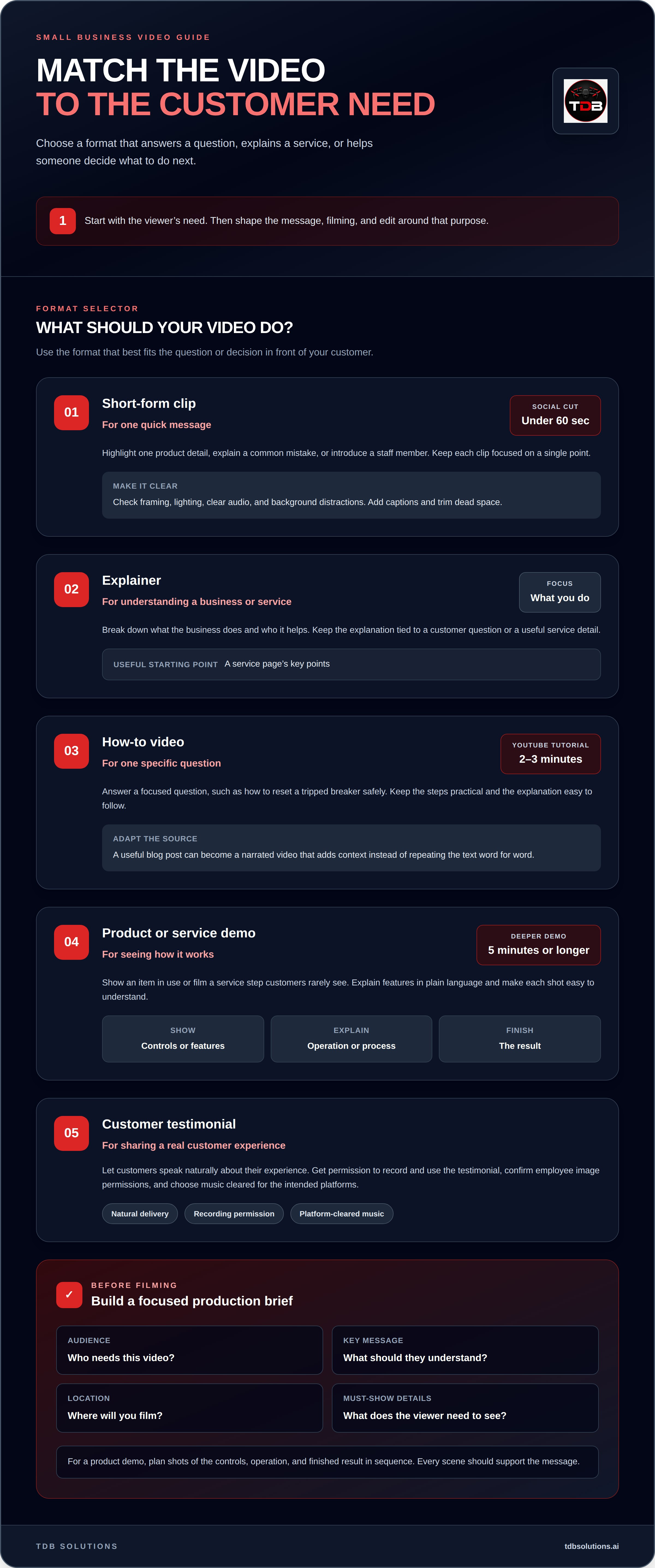
Customer testimonials work best when people speak naturally about their experience. Arrange permission to record and use the testimonial, confirm employee image permissions, and choose music cleared for the intended platforms. These steps help keep the finished video focused and ready to publish.
Social media advertising can put direct-response video in front of nearby audiences. A video campaign can target League City, Clear Lake, Friendswood, or Houston, with a clear offer and specific action, such as calling or booking. Evergreen videos, including service introductions and business FAQs, can also stay pinned on a profile. They give new visitors a useful starting point when a search or social feed brings them to the page.
2. Explainer, how-to, product demo, and short-form videos
Useful video formats answer a customer question, demonstrate a service, or help viewers decide what to do next. Small businesses can use explainers, customer FAQs, product demos, and short process videos. Match the format to what viewers need: a quick tip can earn attention, while a clear demonstration can help someone assess an offer.
An explainer breaks down what a business does and who it helps. A how-to video answers one specific question, such as how to reset a tripped breaker safely. A product demo shows an item in use, with close shots of its features and a plain-language explanation. On YouTube, a 2-3-minute tutorial can answer a focused question; a deeper demo can run five minutes or longer.
A practical demonstration makes a product or service easier to understand. A retailer can show how a tool opens, fits, or works, while a service business can film a step customers rarely see. Plan shots to make each feature clear, record narration or an on-camera explanation, and edit out pauses and distractions. Every scene should support the message rather than rely on broad claims.
Short-form clips work well for one message at a time. A social cut under 60 seconds might highlight a product detail, explain a common mistake, or introduce a staff member. For smartphone production, a professional checks framing, lighting, clear audio, and background distractions before filming. Editing adds captions, trims dead space, and adapts the format for vertical or horizontal viewing.
A focused production brief keeps filming efficient. It identifies the intended audience, the key message, the location, and any details the video must show. For a product demo, that could mean recording the controls, operation, and finished result in sequence. Professional Marketing Media Production can shape those details into a clear video for your business.
3. Video content for each stage of the buying journey
At the discovery stage, introduce the problem your business solves in League City. A local roofer might explain signs of storm damage in a short clip. During consideration, answer practical questions about materials, timing, or service steps. At decision time, use a customer story or project walkthrough to clarify what happens after someone gets in touch. Give each video one relevant action to guide viewers.
Before production, review the questions other businesses address on Google and their public social channels. The goal is not to copy their videos, but to find useful gaps, such as an unexplained service limit or an unclear estimate-request process. Use those gaps to shape a focused script around your target customers’ real concerns.
Existing content gives production a practical starting point. A popular blog post can become a narrated video, while a service page can supply key points for a short explainer. A professional checks that the video adds useful context instead of repeating text word for word. They can also cut an interview into separate clips for each question, then publish each version on a channel suited to its audience.
SEO-friendly blog content and video can address the same search intent. For example, a video answering “How does a roof inspection work?” can sit beside a related article with a clear title, useful headings, and a written explanation. This gives visitors a choice of format while connecting the video to a specific customer need. Include a relevant next step, such as requesting an inspection, to make the page actionable.
Behind-the-scenes footage helps customers understand the work involved in a service. A League City contractor might show a team preparing equipment, reviewing a project plan, or completing a visible stage of work. Choose footage that respects customer privacy and supports the business message. One detailed story can then be edited into shorter clips, each serving a different purpose in the buying journey.
4. Digital marketing strategy for League City small businesses
A local video strategy connects each asset to a business goal, audience, and next action. Start with one priority, such as explaining a service or generating appointment requests. Then select one channel, prepare a realistic publishing schedule, and track engagement, including completed views, inquiries, and calls. A 90-day plan gives you time to publish consistently and review patterns before making major changes.
To support Google visibility, pair a useful video with a page that answers the same customer question. Add a clear title, a written summary, and captions or a transcript explaining the subject. A League City HVAC company, for example, could publish a video about preparing an air conditioner for summer alongside a detailed service page. The strongest video marketing ideas for small businesses in League City connect useful local answers with relevant pages.
Make local relevance genuine, rather than simply adding a city name. Feature neighborhood projects, nearby parks, waterfront settings, seasonal community events, or common local service questions. A restaurant might film a dish being prepared before a community gathering, while a home-service company might explain a maintenance issue customers often face. For specific events, use accurate details and film only where recording is permitted.
Editing and publishing should serve the strategy. Keep each video focused, make the opening clear, and add captions so viewers can follow without sound. Publish the finished version on its intended channel and connect it to a relevant page or contact action. Review which topics prompt meaningful engagement, not just views, and use what you learn to shape the next script.
Choose a schedule your team can sustain. Publishing one video each week on one platform for 90 days can create a clear basis for reviewing audience response. Compare topics, watch time, and inquiries, then adjust the next batch. Use these video marketing ideas for small businesses in League City to build a strategy around local customers and business goals. Plan a video marketing strategy that fits your League City audience.
TDB Solutions: Marketing Media Production
TDB Solutions helps businesses in League City and Greater Houston turn useful video ideas into finished marketing content. With Marketing Media Production, you can plan videos around a service, customer question, or buying decision and create edits suited to your campaign. It is a practical fit when your team has expertise to share and needs professional help shaping the message and production.
Video can complement Custom Mobile-First Websites by giving visitors a clearer view of your services as they explore your business online. For property-focused marketing, Real Estate Media can help present a location through visual content. Choose the support that matches your goal, whether you want to explain a service, strengthen your online presence, or present a property.
Have a video project in mind? Contact TDB Solutions to discuss your marketing goals.
Turn your next idea into a clear plan
Start with one customer question your business can answer on camera. Build the video around a useful point, then give viewers a relevant action to take. This keeps production tied to a real business need instead of creating content without a purpose.
For small businesses in League City, video marketing is more useful when it connects with the rest of your digital presence. TDB Solutions offers Marketing Media Production and Custom Mobile-First Websites, as well as Construction Intelligence for construction project information needs. Each service serves a different goal, helping your business communicate clearly through an appropriate medium.
Start with the customer you want to reach and the message they need. Then decide whether a video, website, or project-focused solution fits that need. Contact TDB Solutions to plan your video strategy. Your next useful video can start with one clear question.
Frequently Asked Questions
What is video marketing for small businesses?
Video marketing for a small business is a planned communication effort, not just an isolated clip. A consistent visual style and voice can make customer-facing content more recognizable. A League City dental practice, for example, might use consistent colors, calm narration, and staff introductions to make its approach familiar. Focus on purposeful messaging that helps customers understand what makes the business distinctive.
Do I need to appear on camera?
No. Your video could use narrated slides, animated graphics, screen recordings, or close-up footage of a product in use. A software consultant, for example, could record a booking-process walkthrough without appearing on screen. Choose a format, plan the visuals, and edit the narration to keep the content clear and accurately represent your business.
Can a professional use AI to help make my videos?
Yes. AI tools can help with tasks such as drafting an outline or creating an initial transcript, but they should not make final decisions about your business. Review every detail against your approved messaging, check technical terms, and edit the script for a natural tone. This helps keep the finished video accurate and true to your business.
How do I know if my videos are working?
Look beyond total plays to see how viewers respond. Review where people stop watching, whether they save or share a clip, and what comments reveal about their questions. For a video linked from a service page, consider whether visitors continue to relevant information. These signals can show which creative choices to refine.
How often should a professional post videos for my business?
Choose a cadence that fits your production capacity, seasonal demand, and the pace of customer questions. A landscaping business might schedule content around seasonal service changes, while a retailer could plan videos when products or promotions change. A professional can map those moments on a content calendar, leaving room for timely updates without forcing your team into an unsustainable posting routine.
Should a professional promote my videos or focus on organic growth first?
Choose distribution according to the campaign’s purpose. Organic posting can support ongoing education and brand familiarity, while promotion can help a launch or time-sensitive message reach a defined audience. Before deciding, clarify the audience, offer, and action the video supports. Then you can judge whether paid distribution fits the campaign instead of treating it as an automatic step.


