

The cost of construction rework in Houston can grow when a mismatch goes unnoticed until crews have already moved on. A drawing may not reflect field conditions, or an installation may differ from the plan. Then scheduled work stalls while teams investigate, coordinate changes, and redo completed tasks.
You already know rework disrupts schedules and pulls people away from planned work. The challenge is catching discrepancies early and giving project leaders a clear visual record of site conditions. On Houston-area projects, consistent documentation can help teams compare field observations with project plans and discuss differences with fewer information gaps.
This article covers common sources of rework, how it affects project delivery, and practical ways to spot and document mismatches before they compound. You’ll also learn how recurring aerial documentation, site progress reports, and volumetric measurements can support project oversight. TDB Solutions provides construction intelligence in Houston, Friendswood, Pearland, Galveston, and League City. The team brings over 10 years of survey experience, and FAA Part 107 certified pilots capture aerial records that help project teams review site progress.
Key Takeaways
- Understand how design gaps, field conditions, and coordination problems can drive the cost of construction rework in Houston.
- Use a consistent sequence to set a baseline, document site conditions, compare them with plans, flag discrepancies, and verify follow-up work.
- Compare site walks, project documentation, and recurring aerial records to choose visibility methods that fit your project.
- Build a repeatable prevention workflow with scheduled reviews, issue logs, assigned owners, and due dates.
- Learn how TDB Solutions’ construction intelligence and aerial documentation can support project oversight across the Houston area.
What Drives the Cost of Construction Rework in Houston?
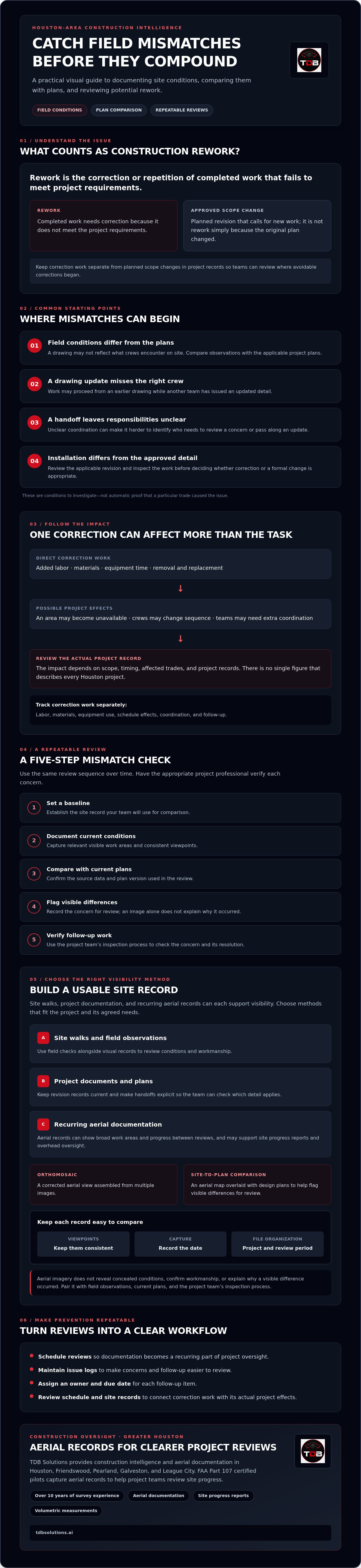
Construction rework is the correction or repetition of completed work that fails to meet the project’s requirements. It differs from an approved change to the project scope. A planned design revision may require new work, but it isn’t rework simply because the original plan changed. That distinction matters when you review project records and identify where avoidable corrections began.
The cost of construction rework in Houston depends on what needs correction and when the team finds the problem. Direct impacts can include added labor, materials, equipment time, or removal and replacement of installed work. Effects can spread beyond the task itself: an area may become unavailable, crews may need to change sequence, and project leaders may spend more time coordinating across trades.
There’s no single figure that describes every Houston project. Scope, timing, affected trades, and project records all shape the impact. To understand the actual cost on your project, track correction work separately from planned scope changes. Record labor, materials, equipment use, schedule effects, coordination, and follow-up. Without consistent records, teams may see that work was repeated but miss the conditions that led to it.
Which project conditions commonly lead to rework?
Rework can start when field conditions don’t match the plans, a handoff leaves responsibilities unclear, a drawing update doesn’t reach the right crew, or an installation deviates from the approved detail. These are coordination and execution issues to investigate, not automatic proof that one trade caused the problem. An approved design or scope change is different. Reviewing value engineering principles can help teams examine whether design choices meet project functions without creating avoidable complexity.
For example, a crew might install an item using an earlier drawing while another team has issued an updated detail. The project team may need to confirm which revision applies, inspect the work, and decide whether a correction or formal change is appropriate. Keeping revision records current and making handoffs explicit can help surface the mismatch sooner.
How can rework affect a Houston construction schedule?
Correction work can interrupt the planned sequence. A trade may need to return to an area while another crew waits for access or for corrected work to pass review. The schedule effect depends on the project, when the team identifies the issue, and which trades or work areas are affected. It can also add coordination tasks as supervisors adjust near-term plans and communicate changes.
Don’t assume every delay has the same cause. Review the schedule, issue logs, and site records to connect correction work with its actual effect. This gives your team a clearer basis for deciding what to address next.
How Do Construction Teams Identify Rework Before It Spreads?
Early detection depends on a repeatable review, not a single site visit. Set a baseline, document current conditions, compare the record with project plans, flag visible differences, and have the appropriate project professional verify each concern. This sequence gives your team a consistent way to review changes and decide what needs attention.
Repeat documentation creates a record of how site conditions change over time. Aerial records can support project oversight by showing broad work areas and progress between reviews. They don’t replace field checks: imagery may not reveal concealed conditions, confirm workmanship, or explain why a visible difference occurred.
What should a useful site record capture?
Make each record easy to compare with the previous one. Capture consistent viewpoints, relevant visible work areas, and the date of each capture. Organize files by project and review period so your team can locate the right record during a progress discussion. Recurring aerial documentation can also support site progress reports and overhead oversight, depending on the project’s agreed needs and deliverables.
For a suitable site and workflow, an orthomosaic can provide a corrected aerial view assembled from multiple images. Imagery alone, however, doesn’t establish whether work meets specifications. Pair the visual record with field observations, current plans, and the project team’s inspection process.
How should teams compare field conditions with project plans?
A site-to-plan comparison overlays an aerial map with design plans to help flag visible differences for review. The comparison is useful only when the source data, plan version, and workflow suit the task. A BIM model in Autodesk Revit may be part of a project’s design context, but that doesn’t confirm a specific provider’s integration with the software.
Use the comparison to raise a question, not make a final determination. A qualified project professional should assess the discrepancy, check the relevant field conditions and current documents, then decide whether the team needs clarification, a formal change, or corrective work. Autodesk’s How to Prevent Rework resource also discusses ways teams can improve coordination and reduce avoidable errors.
When you need a clearer visual record for project discussions, explore TDB Solutions construction intelligence for Houston-area construction oversight. Confirm the capture plan and deliverables that suit your site.
Which Rework Controls Fit Your Houston Construction Project?
No single documentation method fits every jobsite. A close inspection may call for an in-person walk, while a large site may benefit from an overhead progress record. Match the method to the work stage, the level of detail you need, and site conditions. The key question is whether your records help the right people spot discrepancies and follow up.
| Method | Best use | Information captured | Limitations | Follow-up needed |
|---|---|---|---|---|
| Scheduled site walks | Reviewing work that needs close observation | Visible details, field notes, and observations from the walk | Coverage depends on the areas visited and what the team can see | Record concerns, assign an owner, and check the relevant work again |
| Project documentation | Understanding decisions and changes over time | Drawings, meeting notes, change records, and issue history | Outdated plans or inconsistent file dates can confuse the review | Confirm the current document version and connect it to field observations |
| Recurring aerial progress records | Reviewing broad site progress and visible sequencing context | Overhead imagery from repeat captures and related progress reporting, as agreed for the project | Imagery may not show concealed work or confirm workmanship | Have project professionals inspect flagged areas and determine next steps |
When are site walks and project records enough?
Use a site walk when you need to examine a detail up close or speak with the crew responsible for the work. Pair observations with meeting notes, current drawings, and change records. Together, these sources help explain what the team expected, what changed, and what people saw in the field. Keep capture dates and file versions consistent. Otherwise, a useful record can still point reviewers to the wrong project stage or plan.
When can aerial progress documentation add value?
Recurring aerial records can give project leaders a broader view of visible work areas and site sequencing. Repeat imagery lets teams review conditions across capture dates during progress discussions. It doesn’t guarantee that a discrepancy will be detected, and it doesn’t replace a field check. Learn more about construction intelligence drone data and how it can inform project oversight.
Choose controls based on the question at hand. Use direct observation for close detail, project records for decisions and revisions, and aerial progress documentation when an overhead view adds context. Combining methods can give your team a clearer basis for review without treating any one record as a final determination.
How to Build a Practical Rework-Prevention Workflow
A reliable workflow turns site observations into assigned actions and confirmed resolutions. Keep the cycle simple: establish a baseline, schedule reviews, log discrepancies, assign follow-up, and verify the result. This creates a consistent record for investigating the cost of construction rework in Houston.
Start with current project documents and a dated record of visible site conditions. During each review, compare what you observe with the relevant plan or approved change. For every discrepancy, capture:
- Location: Identify the building area, site zone, or work item.
- Observation date: Record when the team saw the condition.
- Plan reference: Note the relevant drawing or document version.
- Status and follow-up: Track the responsible reviewer, next action, due date, and resolution status.
Assign one owner to each follow-up item. Set a due date based on project needs, then review open items at scheduled check-ins. Close an item only after the responsible reviewer confirms the outcome and records the resolution. Use the project’s chosen record system, and keep file names and document versions consistent.
How should teams document and prioritize discrepancies?
Separate what someone observed from what they think caused it. Record proposed fixes as proposals, not approved direction. Log approved design or scope changes separately so the team can distinguish planned work from a potential mismatch. Identify who will review each item and what they need to do next. Route safety or structural concerns through the project’s established professional channels.
How can Houston-area teams adapt the workflow?
Plan reviews around site access, active work areas, and the project schedule. Coordinate capture or walk-through timing so the team can view relevant work without disrupting planned activities. For broader context, drone progress documentation can support project discussions with recurring aerial records. Treat those records as one input, not a substitute for field review or professional judgment.
TDB Solutions provides construction intelligence in Houston and nearby communities, including Friendswood, Pearland, Galveston, and League City. If aerial documentation could support your review process, contact TDB Solutions about construction intelligence and discuss the records your project needs.
How TDB Solutions Supports Construction Oversight in Greater Houston
TDB Solutions provides construction intelligence and aerial documentation for project teams across the Houston area, including Friendswood, Pearland, Galveston, and League City. The team brings over 10 years of survey experience, and flights are performed by FAA Part 107 certified pilots. This work supports project oversight. It doesn’t replace licensed land surveying, field inspections, or the judgment of your construction professionals.
Clear site records can give your team more context as it reviews progress and discusses open issues. Regular aerial documentation, site progress reports, and volumetric measurements can contribute useful information, depending on the project and the deliverables confirmed for it. They don’t guarantee rework prevention or determine on their own whether completed work meets project requirements. Your team still needs to assess conditions and decide what action to take.
What can aerial construction documentation contribute?
Dated overhead records let project leaders review visible site conditions across capture dates. They can help frame conversations about progress, work areas, and sequencing. Volumetric measurements may also inform project discussions when they fit the requested scope. They aren’t a substitute for licensed surveying, and teams should confirm the intended use and limits of any measurement before relying on it.
Before setting up a recurring process, ask about timing for the specific construction documentation service you need. Confirm the capture schedule and which records or reports are available for your project. Don’t assume timing or deliverables from another type of flight apply to your site.
What should you ask before choosing a documentation provider?
Get clear answers before setting up a recurring process. Ask the provider:
- Which areas of the site can you document, and what deliverables can you provide?
- What capture schedule fits the project timeline and active work areas?
- Which file formats will the team receive, and how will capture dates be identified?
- What pilot credentials and insurance do you carry?
- What site access arrangements and project-specific limitations should we plan for?
Those details help you decide whether the records will fit your review process. They also set practical expectations about coverage, delivery, and how project staff should use the information. For Houston-area construction teams looking to improve site visibility, discuss construction intelligence support with TDB Solutions. A clear conversation about your project needs can help you decide whether aerial documentation belongs in your oversight workflow.
Make Site Visibility Part of Your Rework Plan
The cost of construction rework in Houston depends on what went wrong, when your team finds it, and how the correction affects other work. You can’t prevent every change, but you can make discrepancies easier to review. Keep dated site records, compare visible conditions with current plans, and assign an owner to each follow-up item.
Choose documentation that fits the task. Site walks help teams inspect details up close, project records clarify decisions and revisions, and recurring aerial documentation adds an overhead view of visible progress. Use these methods together when they support your review process. Aerial records inform oversight, but they don’t replace field checks or guarantee rework prevention.
TDB Solutions supports construction oversight across Greater Houston with construction intelligence and aerial documentation. Flights are performed by FAA Part 107 certified pilots, and founder Dillon Bates brings over 10 years of survey experience. To discuss a documentation approach for your site, contact TDB Solutions about construction intelligence for your Houston project. A clear conversation about your project can help you decide whether aerial records fit your oversight workflow.
Frequently Asked Questions
What is the cost of construction rework in Houston?
There isn’t one standard figure for the cost of construction rework in Houston because each project has different work, trades, and schedule impacts. To understand the actual impact on your project, track correction labor, materials, equipment use, coordination time, and disruption to planned work. Keep rework records separate from approved scope changes. Without consistent project-specific records, it’s difficult to tell what caused the rework or how it affected delivery.
What causes construction rework on a project?
Construction rework can result from plan-field mismatches, unclear trade handoffs, missed drawing updates, incomplete coordination, or installation that doesn’t meet project requirements. For example, a crew may work from an outdated plan while another team has issued a revision. An approved design or scope change is different from rework. Review current documents and field conditions before deciding whether work needs correction or follows an authorized change.
How can construction teams prevent rework?
You can reduce avoidable rework risk by setting a baseline, reviewing current plans, documenting site conditions, and logging discrepancies as teams find them. Record each item’s location, observation date, relevant plan reference, owner, next action, and resolution status. Then verify completed follow-up. Site walks, project records, and recurring aerial documentation can each support oversight, but no single method guarantees that your team will catch every issue.
Can drone progress documentation identify construction errors?
Drone progress documentation can help your team spot visible differences between site conditions and project plans, but it can’t confirm every construction error. Overhead imagery may not reveal concealed work, close-up installation details, or workmanship. Treat a visible difference as a prompt for review. A qualified project professional should check the relevant field conditions and current documents, then decide whether the issue requires clarification, an approved change, or correction.
How often should a construction site be documented?
Set a documentation schedule that matches your project’s work phases, key milestones, site activity, and access conditions. There’s no single frequency that fits every job. Choose repeat intervals your team can maintain, and capture consistent viewpoints with clear dates so reviewers can compare conditions over time. Add a focused site walk or record when a change in work creates a specific oversight need. Keep the project schedule and review process aligned.
Does aerial construction documentation replace land surveying?
No. Aerial construction documentation provides visual records that can support progress review, but it doesn’t replace licensed land surveying. Use aerial records to discuss visible site conditions and project progress. If your project needs surveying services, engage a qualified land surveying professional for that work. Keep the purpose clear: construction imagery supports oversight, but it shouldn’t be treated as a substitute for survey services or professional field checks.
What should I ask a Houston construction documentation provider?
Ask what site areas and deliverables the provider can support, how capture timing fits your schedule, which file formats you’ll receive, and what project limitations apply. Confirm site access needs, pilot credentials, and insurance. TDB Solutions serves Houston, Friendswood, Pearland, Galveston, and League City. Its flights are performed by FAA Part 107 certified pilots, and founder Dillon Bates brings over 10 years of survey experience.


