
What if one well-planned drone shoot could give your business useful content for its website, social media, and advertising? Drone media production Houston businesses can put to work goes beyond dramatic overhead views. It can combine aerial photography and video with a mic’d-up interview to show what you do, where you do it, and the people behind the work.
Whether aerial footage fits your marketing goals depends on how you plan to use it. TDB Solutions creates marketing media around your business, audience, and location. FAA Part 107-certified pilots and liability insurance support each flight, while a clear brief helps shape the footage into content with a defined purpose.
This guide explains what drone media production can include, how to plan a shoot around your goals and site, and how to use the finished content across multiple channels. You’ll also find practical criteria for assessing a production plan, from pilot credentials and insurance to the deliverables you need.
Key Takeaways
- Set a business goal before the shoot so aerial footage supports your website, social media, or advertising.
- Match each format to its purpose: aerial video adds movement, high-resolution photos capture detail, and interviews put a human voice to your business.
- When assessing drone media production in Houston, consider pilot credentials, liability insurance, communication, and the finished content you need.
- Prepare by defining the goal, sharing location details, prioritizing shots, and getting interview participants ready.
- Combine aerial video, aerial photography, real estate media, and mic’d-up interviews in a content plan that fits your audience.
What Houston Businesses Can Gain From Drone Media Production
Drone media works best when every shot supports a message. A wide aerial view can introduce a location. A moving shot can show how the parts of a property connect. Pair those visuals with a business-owner interview, and viewers get context as well as a human voice. This gives Houston businesses content with a planned role in a marketing campaign, rather than footage that looks impressive but has no clear use.
Drone media production combines planned aerial photography and video, such as overhead photos, moving footage, and business-owner interviews, for marketing uses including websites, social media, and advertising. The aim is to help your audience understand your location, property, or business at a glance. That is what drone media production Houston companies can use across multiple channels is designed to do.
This creative work has a different purpose from technical drone services. Construction Intelligence documents a project and helps teams understand its progress. An aerial inspection remotely examines a structure. Marketing media tells an outward-facing story about your business, property, or brand. The goal determines the flight plan and the content you create.
Which Houston businesses benefit from aerial media?
Aerial views can help commercial businesses explain their location and surroundings. A Houston restaurant might use an overhead view to orient visitors to its building and nearby streets. A business in Pearland or Friendswood could use a property-wide image to help customers understand the site. In Galveston or League City, an aerial perspective can communicate a property’s setting and relationship to nearby surroundings.
Real estate media is another use. Aerial photography and video can give viewers context about a property’s layout and location. Marketing content for other businesses can focus on facilities, customer spaces, or the people behind the work. Choose the angle that answers a real question for your audience, such as where the property sits or how its outdoor areas connect.
What can aerial footage communicate that ground-level content cannot?
From above, viewers can take in the shape and arrangement of a property in one frame. They can see how buildings, outdoor areas, parking, landscaping, and nearby surroundings relate to one another. That wider view provides context that a ground-level shot may not capture on its own.
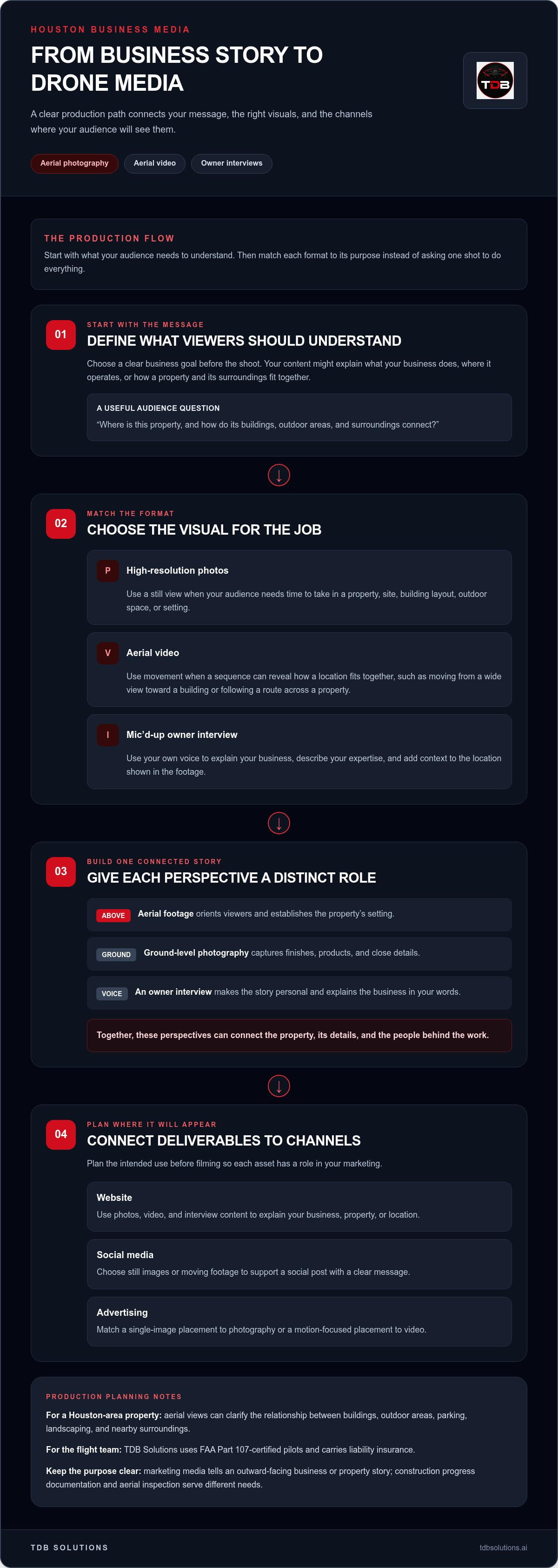
Aerial footage has a specific role, though. Ground-level photography can show finishes, products, and close details. A direct-to-camera business-owner interview can explain your approach in your own words. Combine those perspectives and each asset adds something different: use aerial footage to orient viewers, close-ups to show details, and an interview to make the story personal. Together, these formats can support a website, social post, or ad without asking one shot to do everything.
Aerial Video, Photography, and Interviews: What Your Production Can Include
A useful production starts with the story you need to tell, then matches each format to that job. TDB Solutions produces aerial video, aerial photography, and mic’d-up business-owner interviews for websites, ads, and social media. Plan one shoot around a property’s setting, your services, and the people who deliver them, so each asset has a purpose beyond the flight itself.
Aerial photography captures a still view of a property or site, while aerial video records movement and sequences that help viewers understand how a location fits together. Knowing the difference helps you choose what to capture and where each asset belongs in your marketing.
When should a business choose aerial photography or video?
Choose high-resolution photos when a still image can clearly communicate a property, site, or location. A photo gives a website visitor time to take in a building’s layout, outdoor space, or setting. It can also work as a visual for a social post or an advertising placement built around a single image.
Choose video when movement adds useful context. A sequence can move from a wide view toward a building or follow a route across a property, helping viewers see the setting unfold. Video also suits placements designed for motion. The format alone does not guarantee attention or business results. The message and its fit with your audience matter too.
How do owner interviews add context to drone footage?
A business-owner interview puts a person behind the visuals. You can explain what your business does, describe your expertise, and tell viewers why the location matters. Mic’d-up audio gives those details a direct voice. Aerial footage can support what you say by showing the property or setting you’re discussing.
Think of the formats as parts of one story: your interview explains the business, while aerial shots establish its physical context. That differs from construction progress reporting or survey-grade data, which serve technical project needs rather than a marketing narrative.
Production quality also depends on a properly credentialed flight team. TDB Solutions uses FAA Part 107-certified pilots and carries liability insurance. The Federal Aviation Administration outlines FAA regulations for commercial drone operators, including information relevant to commercial operations. For drone media production Houston businesses can use in marketing, start with the intended audience and channels, then shape the shoot around a clear story.
To connect aerial visuals with your business message, explore TDB Solutions’ marketing media production for websites, advertising, and social media.
How to Assess a Houston Drone Media Production Service
Good production depends on more than attractive footage. You need a creative plan, clear communication, and deliverables that fit your intended use. When planning drone media production in Houston, connect your business goal to the shoot plan and the content you expect to receive.
Before production, clarify pilot qualifications, insurance, deliverables, communication, and how the content will fit your audience, channel, and message. Use this checklist to keep the project focused on what your business needs.
- Credentials: Confirm the qualifications of the pilot responsible for the flight.
- Insurance: Understand the liability coverage behind the production.
- Deliverables: Define the content types the shoot will produce, such as still photos, video, or an interview.
- Communication: Align on the brief, location details, and creative priorities before filming.
- Purpose: Match the planned content to the audience and channel you want to reach.
Which credentials and safeguards should you look for?
For commercial drone work, FAA Part 107 certification is a relevant pilot qualification. TDB Solutions uses FAA Part 107-certified pilots and carries liability insurance. Insurance is one part of responsible planning, not a guarantee against every risk or loss. Clear communication about the flight and the production plan helps you understand how the work will be carried out.
TDB Solutions plans each production around its creative purpose and site details, with clear coordination from planning through the shoot.
How can you tell whether a production matches your marketing needs?
Start with your audience, the channel where they’ll encounter the content, and the message you want them to remember. Then check the plan against those needs: does it support the message, and does it include the assets your campaign calls for? A concise brief gives the production a practical target and helps keep the finished work relevant.
Keep the purpose clear. Marketing media communicates your business story. An aerial inspection examines a structure, while Construction Intelligence supports project understanding and documentation. Survey-grade data serves data-focused needs. These technical outputs have different purposes from creative media, so choose deliverables according to the job you need them to do.
Plan a Drone Media Shoot Across Greater Houston
A clear plan helps turn flight time into useful business content. Before a drone media production Houston shoot, decide what viewers should understand, identify the site details that shape the visuals, and agree on the most important shots. That preparation gives the production team a practical brief and keeps the creative work focused.
What should you prepare before the shoot?
Work through these steps in order. Each decision makes the next one more specific.
- Define the goal. Identify your main message, intended audience, and publishing channels. A website introduction, social post, and advertising placement may need different footage or framing.
- Share location details. Provide the site address, access instructions, and information about the areas you want filmed. Point out important features such as entrances, outdoor spaces, or the relationship between separate parts of the property.
- Prioritize the shots. List the views that matter most. Separate essential visuals from optional ones so the crew can focus on your main message and account for site conditions.
- Prepare interview participants. If you’re including an owner interview, choose a spokesperson and outline the points they should cover. Focus on your services, expertise, and what viewers should know about the business or location.
Keep the brief direct. For example, “Help prospective customers understand the property layout” gives the crew a clearer target than “Get some good drone shots.” Note whether you need still photography, video, an interview, or a mix, and identify where each asset will be used.
How does local planning support a smoother production?
Every site has its own access, surroundings, and conditions. A location in central Houston may call for a different plan from a property in Friendswood, Pearland, Galveston, or League City. Share site details early so the production can focus on views that suit the location. A single approach will not fit every Greater Houston property.
Site access and conditions can affect where the crew works and which views make sense. Applicable flight requirements also shape planning. Share the intended filming area and relevant site information early so the team can plan around the production’s needs. A shot that looks simple from the ground may require more planning from the air.
Before filming, align on the creative priorities, access plan, interview arrangements, and publishing channels. These details help match the flight to your content needs without treating marketing footage as an inspection or technical project report.
Have a Houston-area location and a clear message in mind? Plan your Houston drone media project with TDB Solutions around the visuals your business needs.
Choose TDB Solutions for Drone Media Production in Houston
Your content should fit the way you want customers to encounter your business. TDB Solutions produces aerial video, aerial photography, real estate media, and mic’d-up business-owner interviews for websites, advertising, and social media. Choose the mix that supports your message and gives each piece of content a clear place in your marketing.
Aerial visuals establish a sense of place, while an interview lets you speak directly about your business. Plan both around the same message so your website, ads, and social posts feel connected rather than like separate projects.
What makes TDB Solutions’ local production approach relevant?
TDB Solutions serves Houston, Friendswood, Pearland, Galveston, and League City. Planning around the particular location helps shape the visuals and the story they need to communicate.
Founder Dillon Bates brings more than 10 years of survey experience to the work. That technical background supports careful attention to site layout and visual context, while each production stays focused on business-facing media rather than technical project reporting.
How can your business take the next step?
Start with a clear brief. Describe your business, the location you want filmed, the message you want to convey, and where you plan to use the content. Note which formats you need and what viewers should understand after seeing them. Those details give the production plan a practical starting point.
If you’re shaping a broader video plan, use a marketing video production guide to think through the role each asset should play. Then talk with TDB Solutions about your production and turn your content goal into a focused project plan.
Give Your Next Campaign a Clear Point of View
Choose one business priority and build your media plan around it. You might be introducing a location, refreshing your website, or preparing content for a campaign. Decide what your audience should understand, then give each asset a planned role. That way, the shoot supports a real communication need instead of producing footage without a destination.
For drone media production Houston, a strong brief starts with three details: what you want to say, who needs to hear it, and where the content will appear. From there, shape a focused production that reflects your business and gives your team useful material.
You don’t need to have every shot figured out before you begin. Bring your goal and location into the conversation, and build the plan from there. Start planning your aerial content with TDB Solutions and create media that fits your business.
Frequently Asked Questions
What is drone media production for a business?
For a business, it’s a planned content assignment, not simply a drone flight. Decide who will review the footage, which brand details should appear, and what visual choices fit your business. For example, identify a sign or entrance viewers should recognize, along with any areas that should stay out of the final content. Clear review expectations keep feedback focused.
Can drone media production help a small Houston business?
Yes. A small business can focus its first production on one priority, such as introducing a location or refreshing a campaign asset. Decide who will approve the finished content and gather any existing brand materials that should guide its look and tone. This keeps the project focused and helps the finished work feel consistent with your business.
How long does drone media production take?
The timeline depends on the project scope and production details. If you’re working toward a campaign launch or website update, share the target date early and allow time for filming, review, and any needed revisions. Agree on the schedule before setting a publication date. A clear approval process can also prevent avoidable delays after filming.
Can a drone production include a business-owner interview?
Yes. To prepare, write down the questions or points you want to cover and practice answering in your own words. Use concrete details, such as the type of customer you serve or a common problem your business solves. Keep each response focused on one idea. This helps you speak naturally and makes the interview easier to edit for its intended use.
What should I prepare for a drone media shoot?
Beyond the creative brief, consider the people and activity at the site during filming. Identify a point person who can help the crew find the relevant areas and coordinate with staff. Let employees know when filming may take place, especially if they could appear in the background. Share access procedures during planning so the production team can prepare.
What happens if weather or site conditions change the shoot plan?
Conditions can affect the original plan, so keep your internal team informed if a filming date may shift. If the location changes or access becomes limited, share the update with TDB Solutions before the shoot. The team can discuss how the change affects the plan and what options make sense. Avoid announcing a firm content launch date until you understand how any change may affect production and review.


