

Build a dated record of the problem with photos or video, inspection notes, test records, and documents showing how the condition changes. Knowing how to document construction errors for dispute resolution in Pearland also means separating what you directly observed from any professional opinion about the cause. Under Section 27.001 of the Texas Property Code, a construction defect occurs when a contractor’s work is deficient in its design, construction, or repair.
It’s easy to see a crack, leak, or delay and assume the cause is obvious. But an alleged defect depends on what the contract and plans required, what work was completed, and whether the issue reflects faulty work or different expectations. This guide explains how to distinguish those situations, recognize when a disagreement may be escalating, and preserve useful evidence without changing the original condition. It also compares negotiation, mediation, arbitration, and litigation, so you can understand how the contract, evidence, and parties’ positions may shape the next step.
Key Takeaways
- Separate a visible problem from its cause by comparing the completed work with the contract, plans, and specifications.
- Use dated superintendent logs to connect events, people, locations, and project decisions as a dispute develops.
- Preserve original photos, communications, and records of the condition before repairs or changes make them harder to assess.
- Compare negotiation, mediation, arbitration, and litigation in light of the contract and whether the parties disagree about responsibility or the remedy.
Distinguishing design, performance, and material defects from unclear expectations
Compare completed work with the contract, drawings, and specifications. This helps distinguish a defect from a disagreement about expectations.
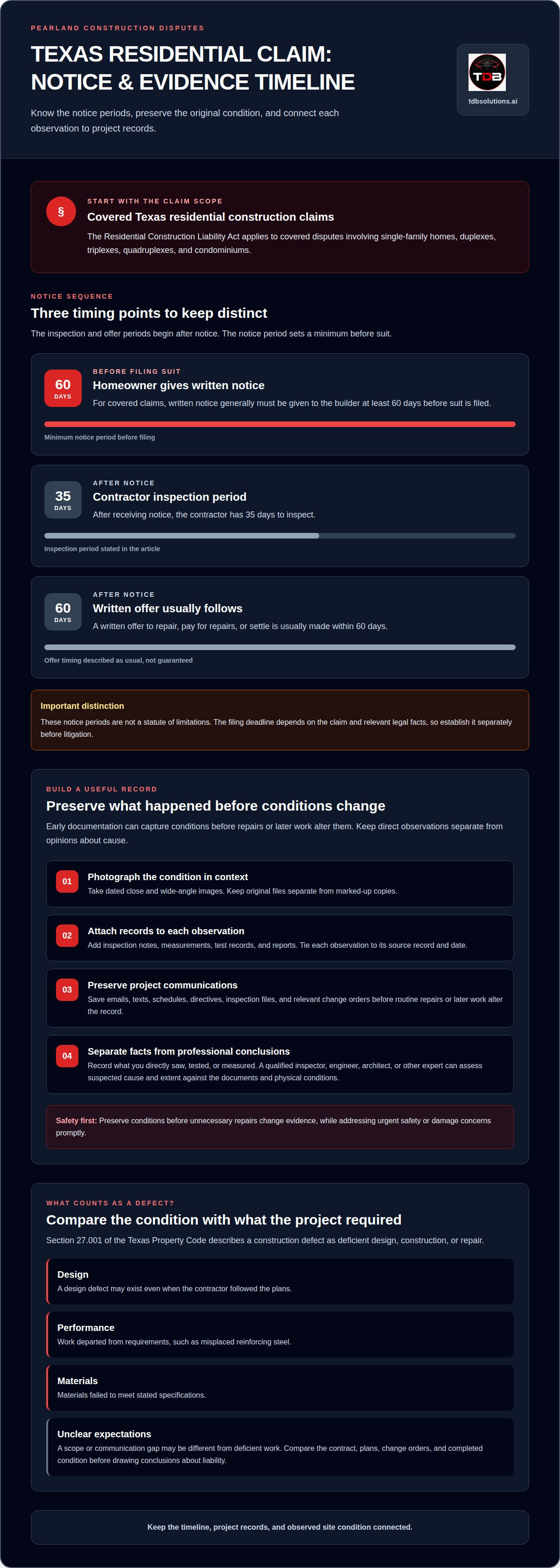
Section 27.001 of the Texas Property Code describes a construction defect as deficient design, construction, or repair. A design defect may exist even when the contractor followed the plans. A performance defect points to work that departed from requirements, such as misplaced reinforcing steel. A material defect involves materials that fail to meet stated specifications. By contrast, an unclear expectation may reflect a scope or communication gap, not deficient work. Compare the contract, plans, change orders, and completed condition before drawing conclusions about liability.
For covered Texas residential construction claims, a homeowner generally must give the builder written notice at least 60 days before filing suit under the Residential Construction Liability Act. After notice, the contractor has 35 days to inspect, and a written offer to repair, pay for repairs, or settle is usually made within 60 days. These notice periods are not a statute of limitations. The filing deadline depends on the claim and relevant legal facts, so establish it separately before litigation.
Photographs and Inspection Records
Photographs and inspection records document a defect’s appearance, location, and condition over time. Take dated images from both close and wide angles. A crack in a finish, for example, needs context showing the wall and room. Keep original files separate from marked-up copies. Add inspection notes, measurements, test records, and reports to show what was observed and when. Together, these records give reviewers more context than photographs alone.
Defect Causes, Extent, and Expert Support
An investigation tests the suspected cause and extent against construction documents and physical conditions. An inspector, engineer, architect, or other qualified expert can examine the work, review specifications, and explain how each conclusion follows from the evidence. For example, an expert may assess whether water damage points to a design detail, installation error, or material failure. Preserve conditions before unnecessary repairs change the evidence, while addressing urgent safety or damage concerns promptly.
Timing matters. Early records capture conditions before repairs or later work alter them. In a stalled liability dispute, discovery can produce additional evidence and support renewed negotiations. Keep observations separate from expert opinions so each record makes clear what was seen, tested, or concluded.
What Are The Indicators That A Construction Project Issue Is Becoming A Legal Dispute?
Repeated missed commitments, disputed scope, or an unanswered request for information can signal escalation. The Texas Residential Construction Liability Act applies to covered residential construction disputes, including those involving single-family homes, duplexes, triplexes, quadruplexes, and condominiums.
Daily Logs and Project Events
Superintendent daily logs are dated records of who did what, when, and where on a project. They help owners reconstruct events when the parties disagree about delays, instructions, or work quality. For example, a log can connect a site inspection, a crew’s absence, and a later schedule change. Record who was present, which areas were involved, what directions were given, and what follow-up is needed.
Records and Field Conditions
Compare project records with field conditions by checking the agreement, drawings, change orders, and inspection notes against completed work. This can reveal differences between the approved scope and what appears onsite. A homeowner might compare the specified finish with the installed material, then record the location and inspection date. Tie each observation to its source record.
Look for patterns, not just one frustrating conversation. An RFI that remains unanswered for three weeks, repeated schedule slippage, or a contractor’s failure to complete agreed work can turn a project issue into a formal dispute. These events matter when they affect performance, cause damage, or leave owners and contractors with different accounts of the agreement.
Notify the relevant project parties in writing when a concern affects scope, quality, or schedule. Identify the work involved, the date, and the response requested. Preserve project communications, including texts about delays or disputed instructions. Clear recordkeeping helps the team find the correct version of a change order, inspection note, or schedule update.
Compare the baseline schedule with updates, look-ahead schedules, and recovery plans. Note each change alongside the event or direction that caused it. If the disagreement creates financial exposure or threatens completion, organized records help an attorney assess the timeline and next steps. Construction progress documentation can also make changing site conditions easier to track.
Documenting facts, impacts, and supporting evidence
For a Pearland construction defect claim, connect each condition to its timeline and practical effects. Knowing how to document construction errors for dispute resolution in Pearland starts with promptly preserving relevant material and keeping observations separate from conclusions.
First-Day Evidence Preservation
First-day evidence preservation means securing claim-related records and the existing site condition as soon as a dispute surfaces. Construction teams should begin preserving evidence within 24 hours. Save project emails, texts from personal phones, schedules, directives, and inspection files. Document the condition before routine repairs change it. If emergency work must prevent further damage or protect people, record the condition when feasible and retain the repair records.
Objective and Organized Evidence
Objective evidence records what someone observed, not what they assume caused it. Keep original files intact and label each item with its date, location, source, and description. Witness notes should state what the person saw, when and where it happened, and who else was present. Separate firsthand observations from opinions so a neutral reviewer can follow the basis for each claim.
Facts and Impacts
A useful impact record links the construction defect to its effects on the project. Note when the issue appeared, which area or work package it involves, and whether it affected access, sequencing, or use. Track disputed labor and equipment in a distinct cost code or tracking category. Pair those entries with schedule updates and recovery plans to show how the issue changed the work, not merely that it caused frustration.
Defect Log Contents and Template
A defect log is a dated index of conditions, evidence, communications, and impacts. Include an entry identifier, discovery date, location, factual description, file references, witnesses, contractor notification, response, and follow-up. Add schedule or work effects when relevant. A spreadsheet or table can serve as a practical template. For owners documenting construction errors for dispute resolution in Pearland, consistent entries make the project record easier to review. Keep supporting files organized, and don’t backdate entries.
Construction dispute resolution methods
For a Pearland construction dispute, the contract and documented facts help shape the path forward. Start by reviewing its notice, inspection, repair, mediation, or arbitration terms.
Negotiation gives the homeowner and contractor a chance to discuss the defect, responsibility, and proposed remedy directly. Focus the discussion with a written summary of the disputed work, supporting records, and the outcome each party seeks. Negotiation can fit when the cause is clear and the disagreement centers on repair scope or terms. Record any agreement in writing, including the work or payment promised and the claims it resolves.
Mediation brings in a neutral third party to help the parties reach a voluntary settlement. The mediator guides discussion but doesn’t impose a decision. Mediation can help when direct talks stall over repair scope or disputed responsibilities. Under Texas Property Code Chapter 27, in RCLA lawsuits involving more than $7,500, both sides have 90 days to ask the court for mediation.
Arbitration puts the dispute before a neutral arbitrator. Whether the decision binds the parties depends on the construction contract. Review the dispute clause before choosing a route, since the contract may require arbitration or mediation. Arbitration may suit a dispute that needs a decision, but the contract’s terms determine how the process works.
Litigation asks a court to resolve a claim when other methods don’t settle it. In covered residential cases under Texas’s Residential Construction Liability Act, a homeowner must give the contractor a formal opportunity to inspect and address the alleged defect before filing suit. A written settlement or repair agreement can limit later claims, so define its scope before accepting. The right path depends on whether liability is disputed, what the contract requires, and whether the parties can agree on a remedy.
Keep the defect record and requested resolution aligned as discussions progress. Discuss construction site documentation to make project conditions easier to review.
TDB Solutions: Construction Intelligence
TDB Solutions’ Construction Intelligence helps you track site conditions and project progress with organized visual documentation. When a Pearland dispute involves changing conditions across a jobsite, aerial imagery can add a broader view alongside ground-level records. It can help show the state of the work and how site conditions change over time, but it doesn’t determine fault or replace legal advice.
Use Aerial Inspections to document visible roof, structure, or asset conditions that need a closer visual review. FAA Part 107 certified pilots conduct each flight, and the resulting imagery can support project records alongside contracts, inspection notes, and expert assessments. This service fits when dated visual context can help clarify what happened onsite.
If aerial documentation would help you track a construction site or inspect an asset, contact TDB Solutions to discuss your project.
Put Your Project Record to Work
A useful record should help you decide what to do next, not just describe what went wrong. A disciplined approach to how to document construction errors for dispute resolution in Pearland treats each new observation as a decision point: does it call for further review, a project adjustment, or a formal response? Keep that purpose in mind as conditions and conversations change.
TDB Solutions’ Construction Intelligence supports ongoing site visibility. Its Custom Mobile-First Websites and Marketing Media Production help construction businesses communicate their work to audiences. These services support project communication, but they don’t replace legal advice or determine who is responsible for a defect.
If you want clearer visual context for your project, contact TDB Solutions about your project. Bring your questions and explain what you need to document. A clear next step can help you move forward with confidence.
Frequently Asked Questions
How Do Construction Contracts And Project Specifications Influence Responsibility In Disputes?
Construction contracts assign responsibility by defining each party’s role, required approvals, and process for changes. Check who had authority to approve substitutions or direct extra work, and whether subcontractors had those responsibilities. For example, a dispute over an owner-requested upgrade may turn on who approved it and whether that approval reached the installer. These details about roles and authorization can clarify responsibility beyond the work description itself.
What Documentation Is Reviewed To Determine If Construction Work Was Done Correctly?
Reviewers need to establish which document version governed the work when crews completed it. Look for revision dates, approval marks, issue records, and superseded plan sets. For example, a detail changed after installation began may help explain why field work differs from an earlier drawing. A clear version history keeps the review focused on the requirements in effect at the relevant time.
How do I photograph and record construction errors so the evidence is useful in a dispute?
Useful photos show visual context that a written description can’t convey. For a recurring leak, photograph water marks after rainfall and again under comparable conditions, including nearby unaffected surfaces for contrast. Avoid filters, digital sharpening, or labels on the image itself. Use neutral file names tied to the relevant log entry, and describe what each image shows without claiming an unproven cause.
Should I hire a Texas construction expert or inspector to document defects?
Yes, consider an independent expert when the defect’s cause or technical significance isn’t clear from visual observation. Match the professional’s expertise to the issue: structural movement may call for an engineer, while a building-envelope concern may need a specialist in that area. Define the question the expert should address, such as whether observed cracking aligns with movement or a construction detail.
How should I preserve damaged materials, repair estimates, invoices, texts, and emails as evidence?
Keep removed material identifiable and document who handled it, when it left the site, and where it was stored. Ask the repair contractor to identify the work area and scope on each estimate or invoice. Label proposals as estimates and completed work as invoiced or paid. For digital messages, retain the surrounding conversation so a sentence isn’t separated from the exchange that explains its meaning.
What are the steps for resolving a construction dispute with a Pearland contractor before going to court?
For a covered Texas residential claim, send written defect notice by certified mail, return receipt requested, to the contractor’s last known address, with available evidence. Keep the mailing proof and a copy of the notice. If the contractor makes an RCLA settlement offer, a homeowner has 25 days to accept it before it is considered rejected. Review any release with an attorney before signing, since settlement terms can affect later claims.


