

Clients look for a clear record of completed work, upcoming milestones, inspection status, open issues, and any changes that affect the schedule. In Galveston, what clients look for in a construction progress update includes current site photos alongside concise notes that explain what has changed and what needs attention. The update should make progress easy to understand, not leave clients guessing.
A photo alone doesn’t tell the full story. A useful update connects visual evidence to completed work, inspection steps, and decisions still needed. Clear, dated information also helps everyone track what has been communicated as the project moves forward.
This article explains which completion and inspection details clients expect, how to report delays or unresolved items, and how information exchange and discovery can shape the record. You’ll see what makes an update practical for a Galveston project, from aerial views of site conditions to notes that keep progress and next steps in focus.
Key Takeaways
- Set an update rhythm that reflects the project’s phase, upcoming decisions, and any changes that need timely attention.
- Separate completed work from work in progress, then connect each milestone to its schedule and inspection status.
- Report budget changes clearly by distinguishing approved change orders from pending requests and explaining their project impact.
- Keep dated visuals, progress notes, and project communications organized so the record stays useful when questions arise.
Information exchange and discovery
Useful updates create a dated record of work, decisions, and open issues. The City of Galveston has adopted the 2021 code cycle with local amendments, so inspection notes should identify the relevant work and its status. Keep messages, approved plans, field reports, and inspection records together. Clear records help establish what changed, when teams learned about it, and which response followed.
Choose one primary channel, such as email or a project portal, and reserve calls or meetings for urgent discussions. After a call, send a written recap listing decisions, responsible parties, and due dates. Include current, labeled site photos, captions identifying the area and work stage, inspection results, and documents relevant to decisions. A photo of installed framing, for example, is more useful when paired with its inspection status and any remaining corrections.
When explaining a delay, state its cause, affected activity, schedule impact, and recovery steps. Show the previous and revised completion dates, identify dependencies, and distinguish confirmed changes from estimates. If an inspection or delivery shifts a task, explain how it affects the next milestone. Avoid unsupported assurances and give clients a clear basis for understanding the revised plan.
If an update flags a cost overrun or quality concern, document the specific issue and request its impact, proposed response, and decision deadline in writing. Compare the explanation with the applicable construction contract and approved changes. Keep the original update and subsequent replies together. If the parties enter dispute resolution or arbitration, organized records can clarify the sequence of events.
The American Arbitration Association’s revised Construction Industry Arbitration Rules and Mediation Procedures took effect March 1, 2024. Its construction arbitration e-discovery guidance covers preserving digital evidence, managing document production, and protecting sensitive or privileged information while keeping discovery proportional and cost effective. Under revised AAA Rule R-45, arbitrators may issue confidentiality orders and must keep all matters confidential. These national industry arbitration rules do not replace project contracts; applicable terms establish the process unless parties agree otherwise. A consistent exchange can promote clearer communication before construction disputes escalate.
How often should contractors send construction progress updates to clients?
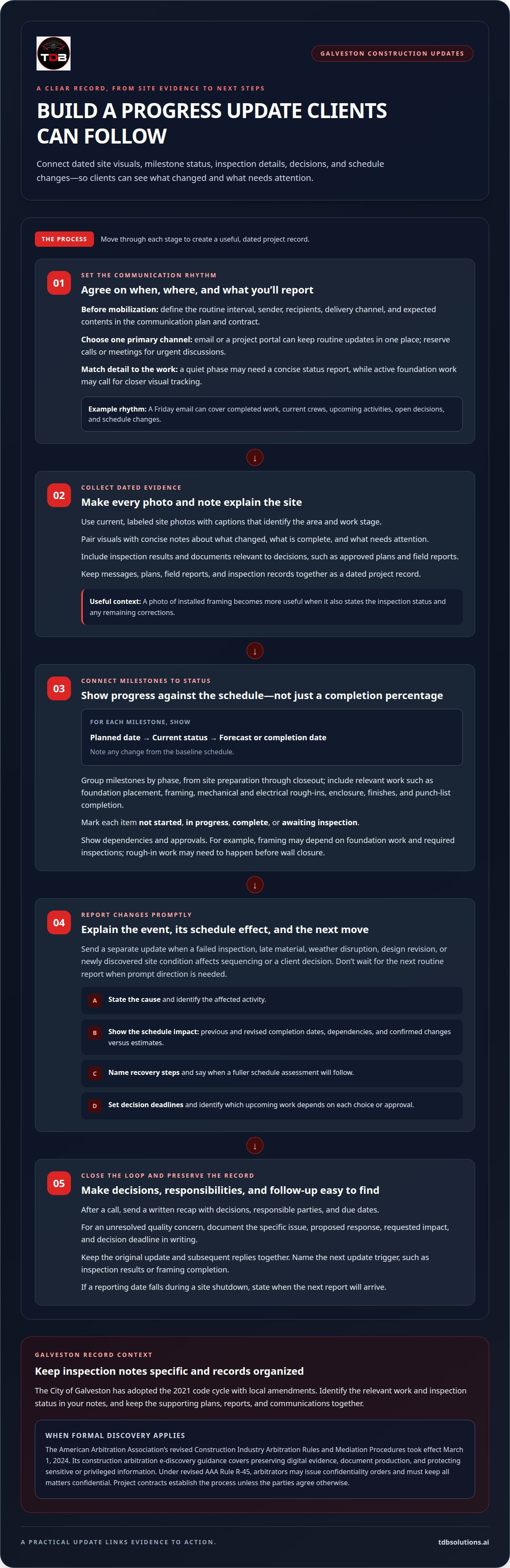
Set the update cadence in the project communication plan and construction contract instead of relying on memory. For contractors deciding what clients look for in a construction progress update in Galveston, agree on whether clients will receive regular summaries, plus separate notices when milestones change. The right rhythm depends on active work, pending decisions, and how quickly site conditions affect sequencing. A quiet phase may need only a concise status report, while active foundation work may call for closer visual tracking.
Define the routine interval before mobilization, then keep it consistent. Name the sender, recipients, delivery channel, and expected contents. For example, a Friday email can summarize completed work, current crews, upcoming activities, open decisions, and schedule changes. If the reporting date falls during a site shutdown, state when the next report will arrive. A consistent schedule helps clients compare updates and spot gaps without searching old messages.
Routine reports aren't enough when an event alters the plan. Send a separate update when a failed inspection, late material, weather disruption, design revision, or newly discovered site condition affects sequencing or a client decision. Lead with the event, identify the affected activity, explain the next action, and say when a fuller schedule assessment will follow. Don’t wait for the next routine report to disclose a change that needs prompt direction.
Use decision deadlines to set additional check-ins. If a finish selection or revised detail is holding up procurement, tell the client when the choice is needed and which work depends on it. Close each report by naming the next update trigger, such as inspection results or framing completion. This approach addresses what clients look for in a construction progress update in Galveston by tying communication to actual work, rather than sending messages for their own sake. The result is a useful rhythm through planning, active construction, and closeout.
Construction milestones and schedules clients want to see
A useful schedule shows more than a target completion date. It connects completed work to upcoming activities and explains what must happen first. For example, a framing milestone may depend on foundation work and required inspections. Show each milestone’s planned date, current status, forecast date, and any change from the baseline schedule. This lets clients see whether the project is tracking, instead of relying on a broad percentage-complete figure.
Group milestones by phase so clients can follow progress from site preparation through closeout. Include work relevant to the project, such as foundation placement, framing, mechanical and electrical rough-ins, enclosure, finishes, and punch-list completion. Mark each item as not started, in progress, complete, or awaiting inspection. If a milestone requires inspection or approval before it is considered complete, make that clear.
- Planned and actual dates: Show the baseline date beside the latest forecast or completion date.
- Dependencies: Identify the preceding task, such as rough-in work before wall closure.
- Inspection status: Note whether an inspection is scheduled, completed, or requires follow-up.
- Next decision: Name the selection or approval that could affect upcoming work.
Explain schedule changes through cause and effect. If a material delivery shifts installation, identify the affected activity and the next dependent milestone. Separate a confirmed delay from a forecast that may change. For a Galveston project, clients also benefit from knowing which work can continue while a delayed task remains unresolved. This clarifies the sequence without suggesting that every delay will move the final completion date by the same amount.
Use a simple milestone table or timeline, with a short note for exceptions. Compare the current forecast with the approved baseline and explain revisions in plain language. Flag decision deadlines and inspection dependencies beside the affected tasks. Clients reviewing foundation work, framing, or closeout can quickly find what is finished, what comes next, and what could shift the schedule.
How should a progress update report budget, costs, and change orders?
A financial update should let clients compare the approved budget with spending to date and the latest forecast. Separate actual expenses, committed amounts, and projected remaining work. For example, a materials order may be committed before the invoice arrives. Label each category, state the reporting period, and explain major variances in plain language. This provides a usable snapshot instead of one unexplained total.
Connect each variance to its cause and effect on the project. If added work changes a finish selection, identify the scope difference, schedule effect, and approval status. Distinguish a submitted change request from an approved change order. Don’t include pending work in the approved budget as if the client has authorized it. Refer to the applicable construction contract and document who must approve changes before work proceeds.
- Approved budget: Show the current baseline, including authorized revisions.
- Actual and committed: Separate recorded spending from orders or work already committed.
- Pending changes: Identify the request, its reason, and the decision still needed.
- Forecast: Explain how approved work and known variances affect projected completion costs.
For each change, include a clear description, supporting documents, the requested decision, and approval status. A revised cabinet layout, for instance, should show what changed from the approved scope and which related work may be affected. Keep the original request alongside the decision and any updated forecast. This audit trail helps the project team explain budget changes without confusing an estimate with an approved commitment.
Present the summary in a consistent format each reporting period. Highlight new variances, changes since the prior update, and decisions that could alter future spending. If the budget depends on unresolved selections, identify those assumptions directly. For a cleaner visual record of project work and property details, discuss project communication needs with our team.
For unresolved cost disputes, the American Arbitration Association handles commercial and residential construction conflicts, including disputes over contracts, delays, quality, and costs. For awarded construction cases closed in 2025 with claims of $100,000-$999,000, the American Arbitration Association reports a median time to award 3x faster than the U.S. District Court median time to trial.
TDB Solutions: Construction Intelligence
TDB Solutions provides Construction Intelligence for teams that need a clearer visual record of site activity. Aerial progress documentation helps track site conditions, completed work, and changes between visits. Site progress reports and overhead imagery add context that ground-level photos may miss, while volumetric measurements can support project tracking when they fit the work.
Turn to this service when scattered photos make it difficult to understand site changes or communicate progress to stakeholders. FAA Part 107 certified pilots capture aerial data, and deliverables are typically available within 24 hours of the inspection flight. The information can support clearer project discussions, but it does not replace inspection approvals or contract records.
For a more consistent visual record of your Galveston construction project, contact TDB Solutions to discuss your site and progress documentation needs.
Make your next project update easier to follow
A clear communication approach starts before the next site report. Decide who needs project information, which decisions they own, and how updates should support those decisions. This gives your team a practical standard for sharing progress with clients and keeping project details accessible as work moves forward.
For teams considering what clients look for in a construction progress update in Galveston, the next step is to match the information format to its purpose. TDB Solutions offers Construction Intelligence for visual project documentation, Custom Mobile-First Websites to present business information across devices, and Marketing Media Production for purposeful content. Each serves a different communication need, from recording site activity to presenting your work clearly.
Bring your project goals and communication needs into the conversation. Contact TDB Solutions to discuss your project and identify a practical next step. Clearer project communication starts with a focused plan.
Frequently Asked Questions
What information should a construction progress update include for clients?
Include enough context for clients to interpret the report and identify the project documents it references. Use consistent status labels, distinguish observed site conditions from forecasts, and identify any decisions needed. Reference plans or inspection records by their revision identifiers. For example, a marked-up drawing should identify the layout it depicts, helping clients distinguish an older plan from the current one.
What construction risks and safety issues should progress updates cover?
Updates should flag inspection failures, quality concerns, and newly discovered site conditions, explaining the affected work, next action, and any schedule impact. For delays, state the cause and recovery steps.
How do Galveston weather, hurricanes, flooding, and coastal conditions affect project updates?
When weather disrupts work or sequencing, report the affected activity, schedule impact, recovery steps, and any change to the next milestone. Galveston’s large- and small-scale construction hurricane preparedness plans apply to projects according to their size and number of stories.


