

A small company doesn’t need to pretend it’s large to look established online. It needs a clear message, a polished website, and useful information that helps Houston customers trust what they see. If you’re looking for how to make your small company look bigger online in Houston, start with the content and local details customers use to judge a business’s credibility.
Being good at your work isn’t enough if nearby customers can’t find you or understand what you offer. A consistent presence helps: clear service pages, helpful articles, and social posts that reflect the quality of your business.
This guide explains how to build that presence through local social media, Houston search visibility, and practical website content. You’ll learn how blogging and SEO can help customers discover your business, what a professional small-business website should communicate, and how strong visuals and consistent branding can make your company look established without unsupported claims.
Key Takeaways
- Use local social posts and targeted messaging to make your business recognizable to the people you want to reach.
- Keep your Houston business details consistent across local search profiles so customers can find and trust you.
- Publish useful service pages and blog content that answer customer questions and support search visibility.
- Build trust with a mobile-friendly website, clear branding, strong visuals, and simple ways for visitors to contact you.
Local social media marketing and targeted ads
Build a local marketing plan around the customers you want to reach and the evidence that helps them trust your business. Tailor each message to its Houston audience, industry, and next step.
Target Local Audiences Across Social Channels
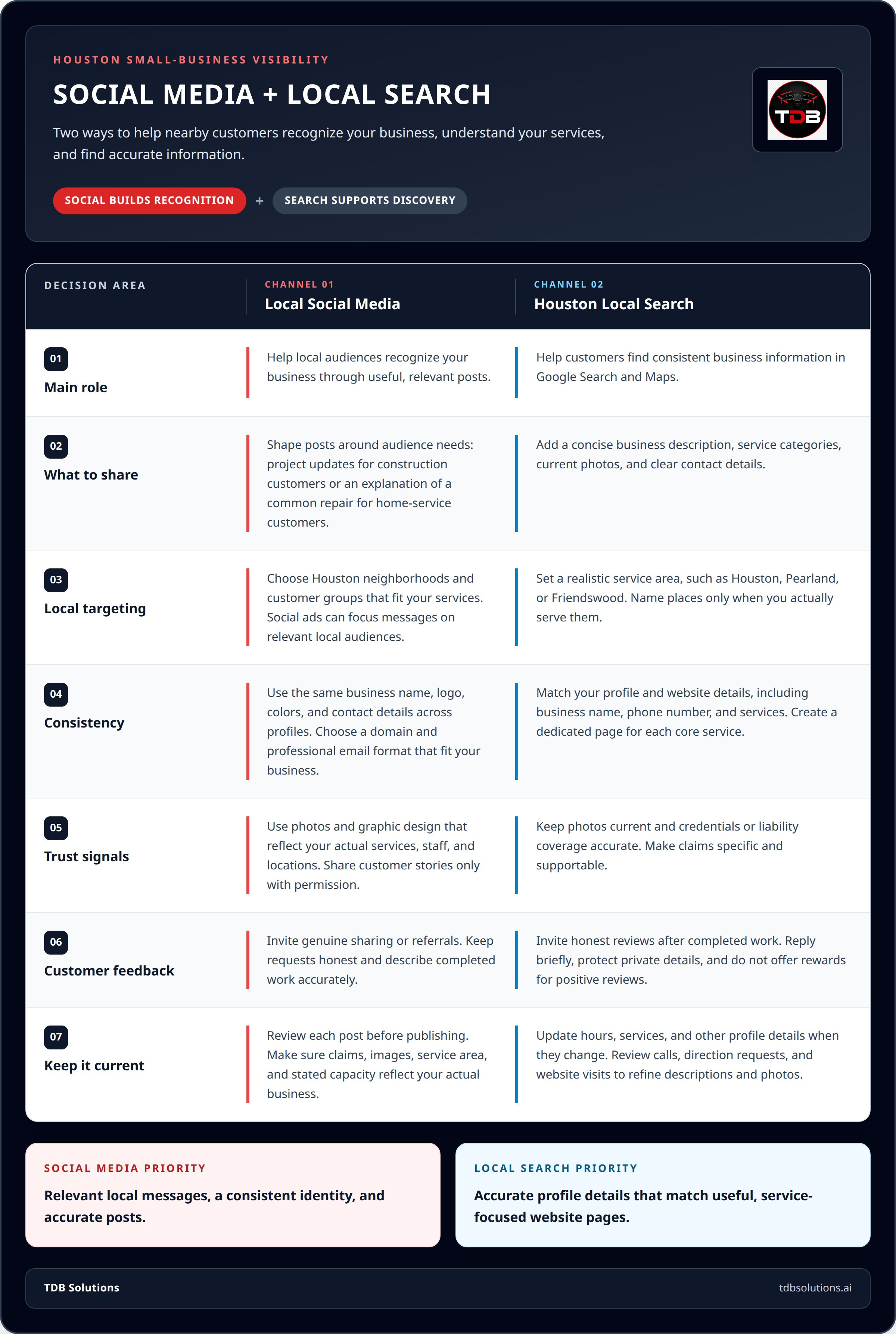
Choose the Houston neighborhoods and customer groups that fit your services, then shape social posts around their needs. A construction company might share project updates, while a home service business could explain a common repair. Social ads can focus those messages on relevant local audiences. Before publishing, check every claim, image, and service-area detail. Don’t imply that your team or coverage is larger than it is.
Use Local Marketing and Referrals Responsibly
Invite satisfied customers and community supporters to share a useful post or refer your business, but keep the request genuine. Publish a customer story only with permission, and describe the work accurately. Consistent branding matters, too: choose a domain and email format that match your business, and use graphic design and online photos that reflect your actual services, staff, and locations. Avoid misleading claims about the size of your operation.
- Plan the launch. Define your audience, core message, service area, and goal before choosing social channels. A corporation and a sole proprietor may have different approval steps, so set clear ownership for each campaign task.
- Build a consistent identity. Use the same business name, logo, colors, and contact details across social profiles. Choose a domain that aligns with your business name and a professional address, such as “[email protected],” rather than a personal inbox.
- Connect marketing to follow-up. Use email or text automation to send timely confirmations, useful updates, or follow-up messages after an inquiry. Keep messages relevant and make sure they reflect the services you actually provide.
- Review before launch. Check that every post describes your actual capacity, credentials, and service area. Don’t imply a comptroller endorsement, claim a local office you don’t have, or promise results your business can’t control.
Houston local search visibility
Create a free Google Business Profile to display essential customer information in Google Search and Maps. Then align it with your website so Houston customers see one clear, accurate business identity.
- Claim and complete your profile. Enter your business name, phone number, operating hours, service area, and the categories that fit your work. Add a concise description that explains what you do in plain language. Keep each detail current, especially when your hours or services change.
- Set a realistic local target. Define where you actually serve, such as Houston, Pearland, or Friendswood. Use those places naturally in your service descriptions when they match your work. Don’t claim an office in the city of Houston if you operate elsewhere, or list locations you don’t serve.
- Match your website and profile. Use the same business name, phone number, and service details on both. Create a dedicated page for each core service, with useful information for local customers. A roof contractor, for example, can explain inspection options and the neighborhoods served without stuffing city names into every sentence.
- Make trust signals specific. Add current photos of your work, clear contact details, and accurate information about credentials or liability coverage. Mention a permit only when it applies to the service and the claim is accurate. Avoid broad claims such as “Houston’s largest” unless you can substantiate them.
- Make customer feedback useful. Invite customers to share honest reviews after a completed project. Respond with a brief, relevant note that protects private details. Don’t offer rewards for positive reviews or write reviews that appear to come from customers.
- Review performance and update details. Check which profile actions lead to calls, direction requests, or website visits. Use that pattern to refine service descriptions and photos. A clearer local online presence starts with accurate information customers can act on.
Website content, blogging, and SEO
To make your small company look bigger online in Houston, publish content that shows how you solve real customer problems. A clear editorial plan helps you maintain a consistent, professional voice.
- Build a useful topic plan. List the questions customers ask before hiring you, then group related questions into themes. A Houston commercial photographer could write about preparing a property for a shoot, choosing image formats, and planning photo use across a marketing campaign.
- Explain your process. Create articles that show what happens from the first inquiry through delivery. For example, a contractor can describe how a project update is documented and explain what customers receive. Specific process details demonstrate experience without relying on inflated claims.
- Use evidence in your content. Support explanations with accurate project examples, original images, and customer feedback shared with permission. Explain the context behind each example, such as the challenge and the work completed. This gives readers meaningful proof instead of broad claims about quality.
- Connect related topics. Link a blog post to a relevant article or service explanation when it helps readers continue learning. A guide about property photography might link to an article on preparing interior spaces. Descriptive link text tells visitors what they’ll find next.
- Make articles easy to scan. Give each post a descriptive title, concise introduction, informative subheadings, and short paragraphs. Break complicated processes into clear stages. Review the page on a phone as well as a desktop, and remove sections that don’t help answer the reader’s question.
- Refresh content based on reader needs. Review inquiries and customer conversations to find topics your current articles miss. In a Visual Objects survey, 76% of consumers said they would search for a company website before visiting its physical location. Useful, well-maintained content helps you make a small company look bigger online in Houston by showing expertise and attention to detail.
What should a professional small business website include to build trust?
- Lead with a clear first screen. Put your business name, main service, Houston service area, and next step near the top. A visitor looking for roof inspections should understand what you do before scrolling. A custom mobile-first website keeps that message readable on phones and desktops.
- Organize services around customer needs. Give each core service its own page, with a plain explanation, relevant examples, and a clear contact option. Separate pages for commercial work and residential projects help visitors find the right information without sorting through one long service list.
- Make contact straightforward. Add a working phone number, business email, and concise inquiry form. Ask only for details needed to respond, such as the service requested and project location. Label each field clearly, and make the confirmation message explain what happens after submission.
- Use real, relevant visuals. Choose professional photos that accurately represent your work, property, or team. For a Houston property business, aerial photography can show the site layout and surrounding context. Pair every image with a useful caption, and avoid stock photos that could misrepresent your projects.
- Show proof without exaggeration. Include customer reviews, project examples, and credentials that apply to your services. Explain what each credential means instead of using unexplained badges. Keep claims about team size, locations, experience, and results accurate, so a polished design never creates a misleading impression.
- Make the site fast and easy to use. Keep navigation simple, use readable text, and compress large image files. Review core web vitals, which measure loading speed, interactivity, and visual stability. Test key pages on a phone, including menus, contact forms, and links, before publishing updates.
Ready for a site built around your services and customers? Request a custom mobile-first website designed to present your business clearly.
TDB Solutions
TDB Solutions can help turn your local marketing plan into a consistent online presence. If your website and social posts feel disconnected, Custom Mobile-First Websites and Marketing Media Production can bring your message, visuals, and customer journey into alignment. Real Estate Media provides professional property imagery, while Construction Intelligence helps communicate construction progress. The right mix depends on what your business needs to explain and whom you want to reach. Clear service pages, relevant visuals, and accurate local details help customers understand your work without overstating your size or capabilities. Contact TDB Solutions to discuss your business goals and choose a practical next step.
Make Your Next Online Move Count
Decide what prospective customers should understand first: what you do, whom you serve, or why your work deserves attention. Keep that priority consistent across your website and marketing. A clear focus gives each update a purpose and makes your business feel intentional, not artificially larger. When considering how to make your small company look bigger online in Houston, build a credible presence that reflects the business you’re growing.
TDB Solutions can bring Custom Mobile-First Websites, Marketing Media Production, and Construction Intelligence into a connected online plan. Each service supports a different need, from explaining your offerings clearly to communicating construction progress. Choose a starting point based on what customers need to understand and what you want them to do next.
Contact TDB Solutions to discuss your online presence and choose a practical next step for your business. A stronger presence starts with a clear message, presented with care.
Frequently Asked Questions
How can a professional help a small business in Houston improve its online presence?
Align your website, visual identity, and marketing content so customers get a consistent impression. TDB Solutions offers Custom Mobile-First Websites, Branding & Graphic Design, and Marketing Media Production. For example, a Houston service business could pair a clear service page with original project imagery and matching social content. The result is a credible presentation of the business you actually operate.
How can a professional optimize a Houston business’s Google Business Profile?
Keep your business profile accurate and focused on the services customers need to find. Select relevant categories, verify hours and contact details, and add current images that represent your business. If you serve Houston and Pearland, describe your actual service area rather than implying you have a storefront or local office where you don’t.
Which local SEO strategies can a professional use to help a Houston small business rank in search results?
Connect local search terms to focused service pages, making sure each page answers a distinct customer need. For example, a Friendswood roofing business could explain roof inspections on one page and outline its service area on another. Clear page titles, useful internal links, and a mobile-friendly experience help search engines understand the pages and visitors find relevant details.
How can a professional use social media to help a small business appear established and credible?
Plan a steady mix of useful posts, project updates, and customer-focused content that reflects your real work. A League City contractor might share a completed project walkthrough and explain the problem it solved. Consistent visual design and accurate captions make each post feel connected to the business. Don’t make staged claims about staff size, locations, or results.
Which online directories and Houston business listings should a professional prioritize for a local company?
Start with Google Business Profile, which can show essential business information in Search and Maps. Then consider directories relevant to your industry and customers, such as a trade association directory or local business listing. Keep your business name, phone number, and service details consistent across profiles. Avoid listings that require claims your company can’t support.
How can a small business create professional branding and online photos on a budget?
Choose a domain that aligns with your business name and use a professional email address. Keep your name, logo, colors, and contact details consistent across profiles. Add clear, current photos of your actual work, staff, or locations, with captions that describe them accurately.


