

The right destination depends on the material: recycling centers in Galveston County may accept metal, concrete, and wood, while usable building materials may be donated to organizations such as Habitat for Humanity ReStores. Managing construction material waste and loss in Friendswood also means planning around city collection limits, since regular heavy-garbage pickup doesn’t accept construction materials such as boards, sheetrock, windows, or cabinets.
A clear plan can keep reusable materials out of the disposal stream and prevent mixed debris from slowing work. This guide explains how to sort materials, organize collection and hauling, and identify potential recycling or donation destinations in Friendswood.
It also covers what to include in a construction waste management plan, how to separate materials for transport, and when project-level tracking can help reduce waste and material loss.
Key Takeaways
- Map each material stream to a reuse, recycling, donation, or disposal destination before work begins.
- Organize sorting and hauling around Friendswood’s collection rules so construction debris doesn’t end up in the wrong pickup stream.
- Use a written waste management plan to assign responsibilities, track material flows, and document where debris goes.
- Construction Intelligence can help you document site progress and identify material loss patterns across a project.
Project, organization, and disposition-level management
Plan each material stream before cleanup begins. In Friendswood, the right destination depends on material type and condition, and whether it can be reused or recycled.
Building Material Pickup and Disposal
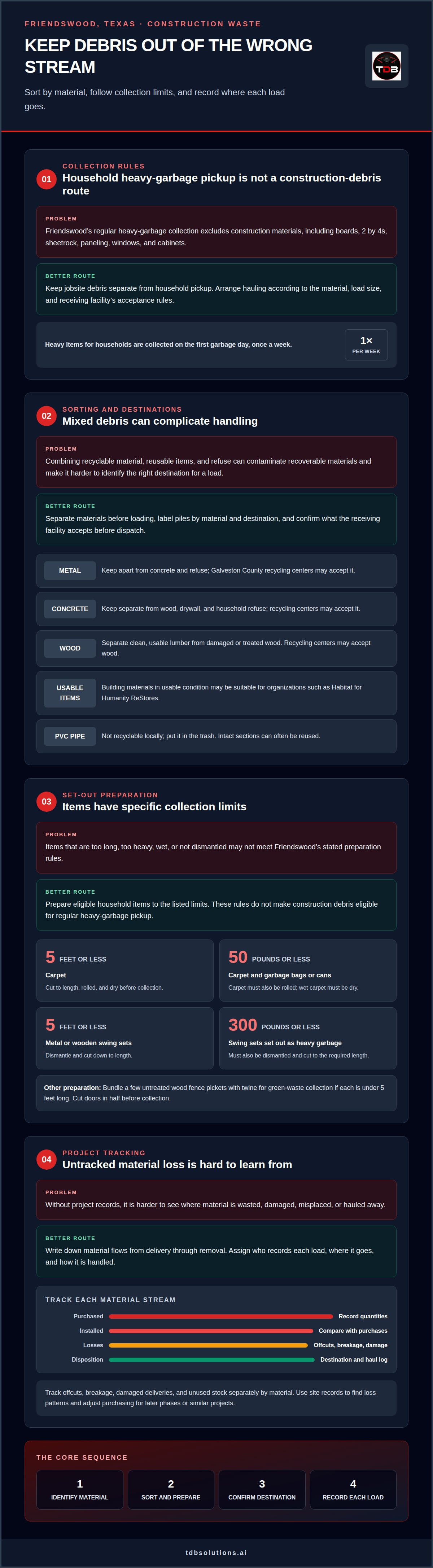
Friendswood’s regular heavy-garbage collection does not accept construction materials such as boards, 2 by 4s, sheetrock, paneling, windows, or cabinets. Keep those items separate from household pickup and direct them to an appropriate debris destination. In Galveston County, recycling centers may accept metal, concrete, and wood. Usable building materials may also go to organizations such as Habitat for Humanity ReStores.
Sort reusable pieces before loading debris. Keep clean, usable lumber separate from damaged or treated wood, and separate metals from concrete. PVC pipes are not recyclable locally and should go in the trash, though intact sections can often be reused. Label each pile by material and destination. This helps crews avoid mixing recyclable materials with refuse during loading and transport.
Requirements and Disposal Fees
Friendswood does not have one construction debris or landfill fee for every load. Fees depend on the receiving facility and material stream, so separate concrete, metal, wood, and trash when requesting or comparing disposal rates. Mixed loads may be handled differently from sorted materials. Record the material type and destination for each haul to keep disposal records clear.
Concrete and asphalt often enter recycling streams that turn them into aggregate or new asphalt and concrete products. Keep these heavy materials apart from wood, drywall, and household refuse so the receiving facility can assess them as a distinct load. For regulatory context, the U.S. Environmental Protection Agency regulates hazardous waste under Subtitle C of Title 40 CFR and non-hazardous construction and demolition debris under Subtitle D. Distinguishing waste types supports sound project organization and disposal planning.
Collection, hauling, sorting, and transport
Plan collection around Friendswood’s pickup rules, and route construction debris separately. The city collects heavy items on a household’s first garbage day, once a week, but regular heavy-garbage collection excludes construction materials such as boards, sheetrock, windows, and cabinets. Keep jobsite debris out of this household stream. Arrange hauling based on the material, its volume, and the receiving facility’s acceptance rules.
Prepare eligible items before setting them out. Friendswood accepts carpet cut to 5 feet or less, rolled, and weighing no more than 50 pounds. Wet carpet must be dry before collection. Metal and wooden swing sets must be dismantled and cut to 5 feet or less; swing sets collected as heavy garbage must weigh 300 pounds or less. Garbage bags or cans must weigh 50 pounds or less.
- Bundle a few untreated wood fence pickets with twine for green-waste collection if each is under 5 feet long.
- Cut doors in half before collection.
- Keep metal, wood, plastic, asphalt, and concrete in distinct piles for sorting and transport.
Separating materials helps crews load compatible items together and keeps recyclable material from contamination by mixed refuse. Galveston County recycling centers may accept materials such as metal, concrete, and wood, while usable items may be suitable for donation. Confirm which materials a destination accepts before dispatching a load. Facilities handle materials differently, so identify each load by contents and destination.
For self-hauling, match the vehicle and load to the debris. Secure materials for transport and keep separate piles apart during loading. A load of concrete, wood, and household refuse may need different handling from sorted materials. Record each trip’s material type, destination, and disposition in the cleanup log. These records show where materials went and help identify avoidable hauling or sorting issues on future work.
Construction waste management planning
A practical plan links purchasing, site handling, and final disposition. For each project, assign responsibilities and record material flows from delivery through removal.
Recycling and Diversion Planning
A waste plan can help guide construction decisions in Friendswood, while project requirements may vary. Managing construction material waste and loss in Friendswood starts with reviewing the contract and project scope before work begins. List expected material streams, planned destinations, and who will document each load. Update the plan when the work changes.
Estimating Material Waste Rates
Estimate waste from project quantities and actual site records, not an assumed universal rate. Compare purchased quantities with installed quantities, then track offcuts, breakage, damaged deliveries, and unused stock by material. For example, record lumber separately from drywall. Use the records to identify where losses occur and adjust purchasing for later phases or similar projects.
Job-Site Waste Reduction
Reduce avoidable waste with accurate takeoffs, coordinated deliveries, and well-planned material staging. Schedule deliveries to match the work sequence, limiting exposure and unnecessary handling. Keep clean offcuts for suitable reuse, and return unused products when supplier terms allow. Separating recoverable materials from refuse can also reduce landfill disposal and the environmental impacts of producing replacement materials.
Material Storage and Protection
Mark storage zones for lumber, drywall, and pipe. Cover moisture-sensitive products and keep them away from standing water and equipment or vehicle paths. Limit access to designated workers, and log deliveries and movements. When managing construction material waste and loss in Friendswood, include stock checks in daily site reviews to catch misplaced or damaged supplies before they disrupt scheduled work.
UFGS 01 74 19 is the Unified Facilities Guide Specification identified for construction waste management and disposal, and can serve as a reference when shaping project procedures.
Reducing and recycling construction and demolition debris can conserve landfill space, lessen the environmental impacts of producing new materials, create jobs, and lower project expenses by avoiding purchase and disposal costs.
What construction material waste and loss management requirements apply in Friendswood, Texas?
In Friendswood, requirements depend on the project contract and applicable local, state, and federal rules. A construction and demolition waste plan may be a contractor-submitted contract requirement, so review the contract before mobilizing. Applicable rules also depend on project scope and material type. Account for hazardous waste separately from ordinary construction debris in planning and records.
For each Friendswood project, document the waste process before demolition or installation begins. Identify who sorts materials, arranges hauling, and records each destination. A practical plan can include:
- Material categories expected, such as lumber, concrete, metal, and drywall.
- Reuse, recycling, donation, or disposal destinations for each category.
- Collection responsibilities, transport arrangements, and recordkeeping steps.
- Procedures for updating the plan when scope or material quantities change.
Link each load in the records to its material category and destination. For example, do not record a concrete load as mixed construction debris if the project tracks concrete separately. Update the plan after scope changes, delivery issues, or unexpected demolition finds. This creates a useful record for project teams and supports contract reporting where required.
Before work starts, compare the contract language with the project’s actual sequence. Renovation that includes demolition may create different debris streams from a new installation, while unexpected damaged materials can change hauling plans. Assign one person to maintain the current plan and collect load records. This clarifies responsibilities without assuming one rule applies to every Friendswood project.
Need clearer site records for a project? Discuss project documentation and plan how site observations can support organized reporting.
In the United States, construction and demolition debris is defined at the state level. A general waste category alone does not prove that a particular load meets the applicable definition. Check local, state, and federal requirements for the project, and confirm how they relate to the contract’s documentation expectations. Keep material descriptions consistent across sorting instructions, hauling records, and destination records. If the work or materials change, revisit the requirements and update the records. This helps the team avoid assumptions about what qualifies as construction and demolition debris in Friendswood.
TDB Solutions: Construction Intelligence
TDB Solutions provides Construction Intelligence for teams seeking clearer project visibility alongside waste planning. Aerial documentation, site progress reports, and volumetric measurements can help you review site conditions, track changes, and identify material issues that may affect project records.
Use this support when ground-level updates leave gaps or you need consistent visual records across construction phases. FAA Part 107 certified pilots capture aerial data, while your project team remains responsible for sorting, hauling, and choosing approved disposal destinations. The information supports jobsite oversight, but it doesn’t replace facility acceptance rules or a project waste plan.
Contact TDB Solutions to discuss Construction Intelligence for your project.
Build Better Project Visibility From Here
Sound waste decisions start with clear information about what arrives on site, what gets used, and what leaves. For teams managing construction material waste and loss in Friendswood, make project visibility part of the regular workflow, not an afterthought. Consistent documentation can help your team review progress and identify where material handling needs attention.
TDB Solutions provides Construction Intelligence for construction progress documentation, as well as Marketing Media Production and Custom Mobile-First Websites to communicate your work and capabilities. These services support project oversight and business communication; your team remains responsible for material sorting, hauling, and disposal.
Choose the support that fits your next project or business goal. Contact TDB Solutions to start a conversation about your needs. A clearer view of the work can help you make the next decision with confidence.
Frequently Asked Questions
Which waste disposal facilities can I use?
For construction debris around Friendswood, consider Galveston County recycling centers that accept the material, or donation organizations such as Habitat for Humanity ReStores for usable items. Acceptance depends on material type and condition. Separate clean, reusable items from damaged debris, then sort by material before arranging transport. For example, keep metal and concrete loads separate so each destination can assess them appropriately.
Where can contractors in Friendswood dispose of construction debris and recyclable materials?
Contractors can take recyclable building materials to Galveston County recycling centers that accept them, and donate usable materials to Habitat for Humanity ReStores or similar organizations. Keep project debris out of Friendswood’s regular heavy-garbage collection, which excludes construction materials. Before hauling, group materials by type and choose a suitable destination for each load. Reuse intact items on the project when practical to avoid unnecessary disposal trips.
What are best practices for sorting, documenting, and hauling construction waste in Friendswood?
Set up labeled staging areas before demolition or installation, then keep reusable, recyclable, and disposal-bound materials separate. Record each load’s contents, date, destination, and disposition in the project log. For example, note whether clean lumber was reused, donated, recycled, or discarded. Plan trips around each facility’s material requirements, secure loads for transport, and update records when project changes create new debris streams.


