

Trust is built before the first tool reaches the jobsite. Knowing how to build trust with clients as a contractor in League City starts with clear communication, realistic expectations, proof of insurance, and follow-through. When clients understand what’s happening and what comes next, it’s easier to navigate decisions and project changes together.
Clients expect quality work, straight answers, a clear schedule, and early notice when plans change. This guide covers practical ways to deliver that experience, from listening carefully and documenting the scope to sharing progress updates and keeping commitments. Learn how to clarify the process, address concerns promptly, and build confidence through the final walkthrough.
Key Takeaways
- Keep paperwork and project concerns moving with timely updates, plain-language explanations, and thoughtful responses.
- Align on scope, budget, schedule, and decision-making before work begins to reduce surprises later.
- Understand how liability and workers’ compensation coverage contribute to a more transparent working relationship.
- Build confidence by setting realistic commitments, communicating changes early, and following through on agreed next steps.
1. Communicating proactively about paperwork and project issues
At the start of each League City project, name the main contact and agree on communication channels. Ask whether the homeowner prefers calls, texts, or email for routine updates, and set a clear expectation for when you’ll check messages. If a question needs research, acknowledge it promptly and say when you’ll follow up. A brief response is better than leaving silence to look like avoidance.
Keep project paperwork easy to follow. Before work begins, clarify which documents need review, who is responsible, and what happens next. If a permit document is awaiting action from a department, explain its status and the next step in plain language. Don’t imply approval is complete while it’s pending. Send updates in writing so both sides can refer to the same information.
Listen before proposing a fix. Ask the homeowner to explain the concern, then restate it to confirm you understand. If a material choice or work sequence affects the plan, describe the options and invite the client’s input. Pausing to listen can surface a concern before it becomes a dispute. Record agreed changes in the project notes and share the revised details.
Address project challenges directly. Weather, hidden site conditions, and delayed supplies can change the work plan. Explain what happened, which task is affected, and what you’ll do next. If you don’t yet know the full impact, say what you’re investigating and when you’ll provide another update. Don’t leave the client to discover a delay on their own.
Pay attention to contractor communication from the first estimate onward. Notice whether the contractor arrives as agreed, answers questions clearly, and follows up on promised documents. An eight-hour gap after a homeowner raises an issue can erode confidence, especially without acknowledgment. Responsiveness doesn’t mean having every answer immediately. It means showing the client that their concern has an owner and a next step.
End each update with a specific action: who will do what and when the next update will arrive. For example, say you’ll send a revised work sequence after reviewing a site issue. Then follow through at the agreed time, even if the update is that you’re still working on a solution. Consistent, specific communication turns uncertainty into a manageable project discussion.
2. Setting project, budget, and schedule expectations
Use the first consultation to understand the homeowner’s priorities, constraints, and definition of success. Ask which outcome matters most, such as making a kitchen easier to use or preparing a room for a particular purpose. Clarify how the household will use the space during construction. Knowing how to build trust with clients as a contractor in League City starts with agreeing on the result together.
Write estimates and contracts so the proposed work is easy to understand. Specify the scope, materials, fixtures, square footage, finish level, subcontractor qualifications, schedule, and payment terms. List exclusions, too. For example, state whether painting a connected hallway is included in a room renovation. Review the details with the homeowner before either side relies on them.
Align the budget with project goals by sorting requested work into priorities. Separate essential repairs from preferred upgrades, then discuss which choices fit the available budget. A homeowner might prioritize durable flooring now and defer a decorative feature. Record the selected scope and materials to give future decisions a clear starting point.
Build the schedule around the actual work sequence and client decisions. Show which tasks depend on completed selections, property access, or another trade’s work. Set decision dates for choices such as tile or fixtures, so the homeowner understands how timing affects the plan. This turns a broad target date into a practical sequence of agreed steps.
Contractors can build trust from the first consultation by listening, clarifying priorities, and explaining the scope in everyday language. After completion, invite a review that reflects the client’s actual experience. If a complaint arises, acknowledge the specific concern and agree on a suitable next step. Respond thoughtfully rather than arguing about the client’s account.
A clear project page can help prospective clients understand your process before they reach out. A custom mobile-first website can present your work and approach in an accessible format.
Ask about needs, main contact, ideal timeline, budget, and expectations; discuss the project, review scope, schedule and payment terms, check in before work, and promptly explain challenges, solutions, and progress until resolved.
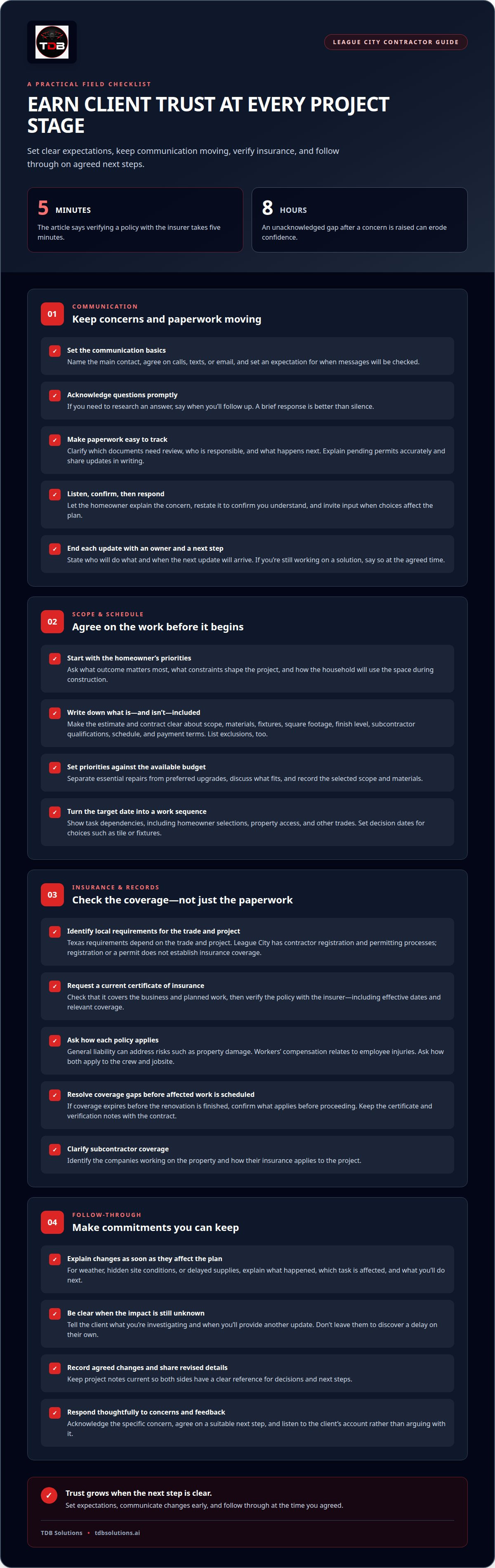
3. Checking liability and workers’ compensation insurance
Texas licensing, insurance, and permit requirements depend on the trade and project. League City has contractor registration and permitting processes, so identify the applicable steps before work begins. Keep these checks distinct: registration or a permit doesn’t establish that a contractor carries insurance.
Ask for a current certificate of insurance covering the business and the planned work. Then verify the policy with the insurer, including its effective dates and relevant coverage. This verification process takes five minutes. General liability can address risks such as property damage, while workers’ compensation relates to employee injuries. Ask how each policy applies to the crew and jobsite.
For example, a certificate may show coverage that expires before a renovation is finished. Resolve that gap before scheduling the affected work rather than assuming the document remains current. Keep the certificate and verification notes with the contract. If subcontractors will work on the property, clarify which companies are involved and how their insurance applies. Clear records help avoid confusion if an incident occurs.
In Texas, clients can check a contractor’s license or registration in the records relevant to the specific trade, then confirm insurance directly with the insurer. Contact references about comparable projects and ask whether the contractor followed the agreed scope, communicated changes, and resolved complaints. These steps provide a fuller picture than a certificate or online review alone.
Insurance checks also support clear conversations about payments. Tie payment milestones to documented project progress and agreed work, not assumptions about coverage. If a policy changes or a subcontractor joins the job, update the project file and explain any effect on the work plan. Don’t describe coverage as broader than the certificate and insurer confirm. Specific records, honest explanations, and timely updates help clients understand who is responsible for each part of the job.
Requirements vary by trade and project. Before work begins, review the applicable Texas licensing or registration records and League City’s contractor registration and permitting steps. Verify insurance separately with the insurer.
4. Keeping promises without overpromising
Before making a commitment, consider your team’s skills, workload, and authority. A contractor who handles interior framing shouldn’t promise specialized electrical work without qualified support. Define who will perform each task and what your team will deliver. Clients trust a clear boundary more than a confident promise that exceeds the crew’s capabilities.
Test each commitment against the actual job conditions. A site visit can reveal access limits, existing damage, or installation details that affect the work. If your estimate depends on an assumption, state it clearly. For example, explain that a repair covers visible damage, while concealed conditions require a separate decision and written approval.
Keep promises tied to the agreed scope. If a homeowner requests an extra feature during the job, explain whether it fits the existing agreement or requires a change. Don’t treat a casual conversation as approval to add work. Confirm the revised deliverable and responsibilities in writing so the crew and client share the same understanding.
Be precise about what a finished result means. “Complete the room” can mean different things to different people. Specify the agreed finish, cleanup expectations, and any work the homeowner will handle. Before calling the job complete, compare the result with those criteria. This gives the final walkthrough a clear purpose and helps prevent vague promises from becoming disputes.
Review public claims about your capabilities with the same care. Describe work your team performs, not every service a client might request. Use accurate project examples to show the type of result you can deliver. A clear presentation of completed work helps prospective clients understand your strengths without implying broader capabilities.
Reliable contractors don’t need to promise everything. They make specific commitments they can keep, keep the agreement visible, and complete the work to the expectations both sides approved. That discipline builds a reputation based on real work, not claims the crew can’t support.
TDB Solutions
TDB Solutions helps contractors build client confidence with clear project information and professional presentation. Its Construction Intelligence services provide visual progress documentation to help clients understand what’s happening on a jobsite. Aerial Inspections support remote visual reviews of roofs and other assets, while Marketing Media Production helps present completed work clearly.
Your public-facing presence matters, too. Custom Mobile-First Websites give prospective clients a direct way to learn about your work and communication style. Pair clear project updates with accurate visuals and straightforward service information. This can help set expectations before the first consultation and reinforce them as work progresses.
For clearer project documentation or a stronger presentation of your work, contact TDB Solutions to discuss your needs.
Make trust part of your next project
Make every client interaction reflect how your business works: clear decisions, dependable follow-through, and visible progress. As you consider how to build trust with clients as a contractor in League City, think beyond the current job. A consistent way to document projects and present your work can set expectations before the next consultation begins.
TDB Solutions supports that effort with Construction Intelligence for jobsite progress, Custom Mobile-First Websites to communicate your services, and Marketing Media Production to present completed work. These services can give clients a clearer view of your process and results. Choose the support that addresses your needs, whether that’s project visibility or a stronger online presence.
Ready to plan a clearer way to present your work? Contact TDB Solutions today and take the next step toward a more confident client experience.
Frequently Asked Questions
How often should contractors update clients on project progress?
Update clients at agreed project milestones and whenever a decision or site condition changes the plan. At kickoff, choose a regular check-in day and channel, such as an email covering completed work, upcoming tasks, and decisions needed. For an active issue, update the client sooner rather than waiting. Even if progress hasn’t changed, confirm the next milestone and any action the client needs to take.
How should contractors handle delays, change orders, and unexpected costs?
Explain the cause and project impact, then document the proposed change before proceeding with affected work. A change order should identify the added or revised work, materials, schedule impact, and any payment milestone changes. Separate required repairs from optional upgrades so the client can make an informed choice. Keep the original scope and revised agreement together to create a clear record of what both sides approved.


