
Clear communication on a construction project takes more than frequent updates. To improve communication with remote construction stakeholders in League City, give everyone reliable access to current project information, set expectations for each communication channel, and document decisions in one consistent place.
When owners, contractors, design teams, and field crews work in different locations, teams can easily miss instructions and updates. A clear communication plan helps: define who needs each update, when they’ll receive it, and how they can ask questions or flag issues.
This guide explains how cloud access and project technology keep information organized, how clear records make decisions easier to track, and how regular, two-way engagement builds trust. Find practical ways to share progress, track changes, and make communication work for the people involved, not just the schedule.
Key Takeaways
- Set a communication plan that defines who needs each update, when it arrives, and where project documents live.
- Match each message to the right channel: use calls for urgent issues, and formal project tools for instructions and records that need a paper trail.
- Track RFIs, drawing revisions, change orders, and meeting actions in a central system so decisions stay clear and traceable.
- Build stakeholder trust through specific updates, active listening, and visible project progress; TDB Solutions’ Construction Intelligence can support clearer site reporting.
Project management technology and cloud document access
Give every stakeholder access to one controlled source for schedules, drawings, specifications, and decisions. A project management platform can show which files are current, list revisions, and identify issue owners. For example, project managers can replace an outdated plan while preserving its revision history, so field staff and remote managers refer to the same approved information.
Make current documents easy to find in the field. Organize folders by work area, label files with revision dates, and mark approval status. Give subcontractors access to relevant instructions while protecting controlled records from unintended edits. Sharing a link to the approved site plan is clearer than sending attachments through several channels.
Use a project portal to share status reports, milestones, and issue discussions. Record each issue’s location, owner, next action, and due date. A field lead can add a photo of a blocked work area, and managers can respond in the same record. Keep closed items searchable so the team can refer back when similar conditions arise.
Plan communication before work starts. List each stakeholder, the information they need, the channel, and the reporting schedule. For example, send owners a monthly milestone summary while field staff access task documents through the project platform. Keep updates relevant and clear, with enough detail for recipients to act but without flooding them with unrelated files.
Poor communication can leave teams following outdated instructions, overlooking emerging issues, or disputing what was decided. Reduce these risks by controlling revisions, assigning issue owners, and defining an escalation path for unresolved problems.
For League City projects, include relevant City of League City contacts, utility owners, and affected public agencies in the communication plan. Send notices to the stakeholders responsible for each issue, and retain their responses in the project record.
What’s the role of technology in construction communication?
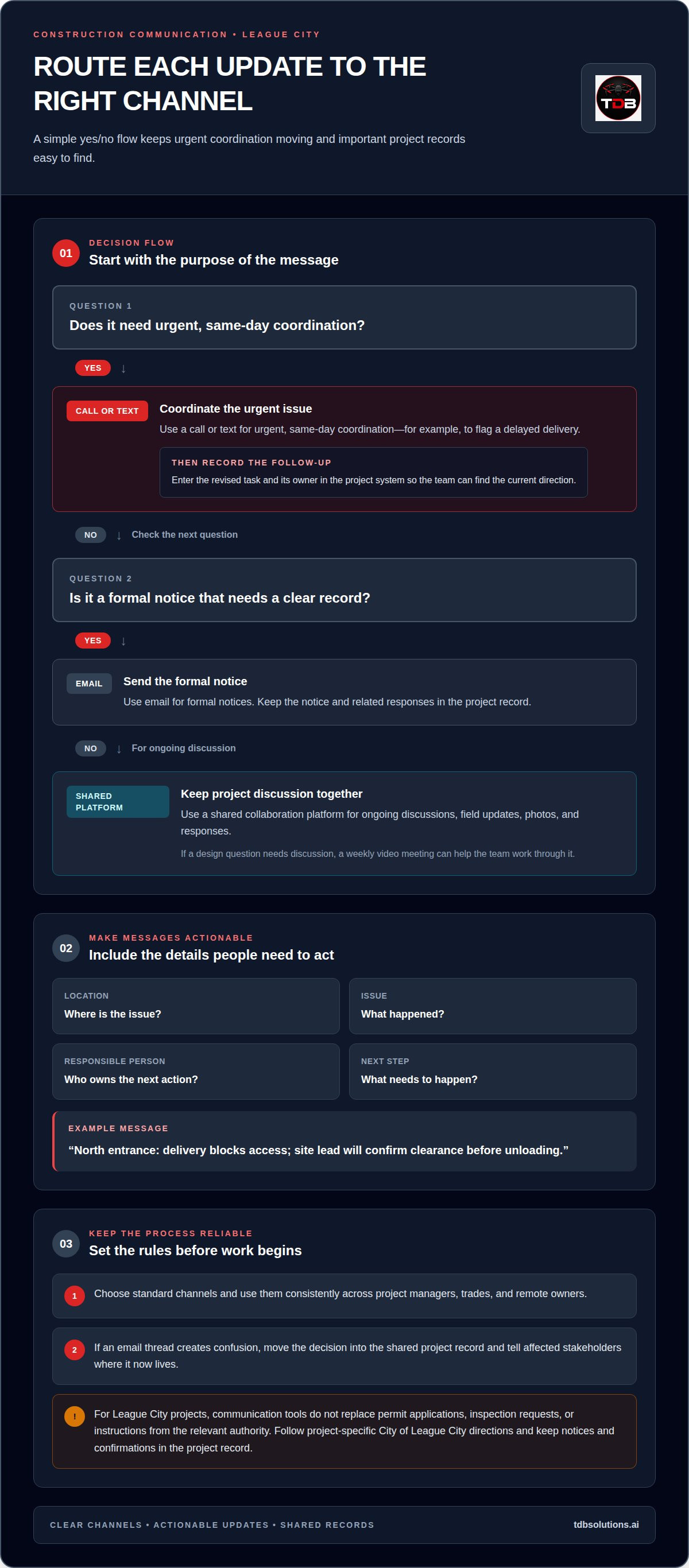
Technology works best when each channel has a clear purpose. Set a simple protocol: use calls or texts for urgent, same-day coordination, email for formal notices, and a shared collaboration platform for ongoing discussions. For example, a field supervisor can text that a delivery is delayed, then record the revised task and owner in the project system.
Choose standard channels before work begins. A weekly video meeting can address design questions that need discussion, while a mobile app can carry field updates and photos. Keep the channels consistent across project managers, trades, and remote owners, so everyone knows where to send feedback and find responses.
Make updates direct and actionable. A useful message identifies the location, issue, responsible person, and next step. For example, “North entrance: delivery blocks access; site lead will confirm clearance before unloading” gives the team a clear task. Use brief meeting recaps to capture decisions and share them with anyone who was absent.
In League City, construction communication tools do not replace permit applications, inspection requests, or instructions from the relevant authority. Follow the City of League City’s project-specific submission and inspection directions, and keep related notices and confirmations in the project record. This gives remote stakeholders a shared reference without treating informal chat as an official submission.
Review your channel strategy during regular check-ins. If an email thread creates confusion, move the decision into the shared project record and tell affected stakeholders where it now lives. For visual progress updates that remote teams can review together, explore project communication resources.
Documenting RFIs, change orders, drawings, and meeting decisions
Log every RFI in one project record with its question, location, owner, due date, and response. Link supporting drawings or photos so remote team members have the same context. Review open RFIs weekly, assign responsibility for each response, and record when the answer reaches affected trades. This creates a traceable path from issue to decision.
Control drawing changes through one current set. Mark each revision clearly, archive superseded versions, and notify affected team members when an approved update changes field work. For example, a revised utility plan should identify the changed area and the crew that needs the update. A visual comparison can help remote reviewers quickly spot the affected scope.
Record each change order’s reason, decision status, schedule effect, and responsible approver. When priorities shift, project managers can use short work cycles to review new constraints and reset near-term tasks. Update the shared schedule after decisions, then tell crews what changed and when the revised direction takes effect.
Use a consistent agenda for construction meetings: progress, open RFIs, proposed changes, constraints, and next actions. End with a concise recap naming each decision, owner, and due date. Send daily or weekly progress reports as project needs dictate, including current milestones, blockers, and actions that need stakeholder input.
Strong communication combines focused agendas, regular progress updates, and centralized records for RFIs, changes, drawings, and decisions. Keep updates factual, and assign every action to a named owner with a due date.
Building stakeholder trust and engagement
To improve communication with remote construction stakeholders in League City, make each update specific, timely, and open to feedback. For example, tell contractors that a delivery delay affects the north access road, explain the schedule impact, and identify the next action. Clear facts help remote team members understand the issue without relying on hallway conversations.
Tailor project updates to each audience. Field crews need practical work instructions, while owners may need milestone status or decisions that affect scope. Invite targeted feedback through a shared platform. Ask, “Does this access change affect your planned work?” Then summarize the response so participants can see how their input shaped the decision.
Bring key stakeholders into planning before major decisions. If a League City project faces a schedule shift, explain the reason, affected work, and possible responses. Ask participants what constraints the new plan creates. Listening first helps project managers address concerns and gives contractors a clear basis for action.
Make remote meetings participatory, not just status broadcasts. Ask each trade lead to describe progress, blockers, and needed support. If someone raises a sequencing concern, restate it to confirm understanding, then assign an owner. Follow up in writing so absent participants receive the same decision.
A practical way to improve communication with remote construction stakeholders in League City is to recognize contributions with specific examples, such as resolving an access conflict or meeting a milestone. Honest updates about unresolved issues also protect credibility. For a stronger visual record of site progress, discuss construction communication needs and how project documentation can keep remote stakeholders informed.
TDB Solutions: Construction Intelligence
TDB Solutions can support your League City project with clearer visual progress information for remote stakeholders. Its Construction Intelligence services provide aerial documentation, site progress reports, volumetric measurements, and overhead views. These deliverables add a visual reference to conversations about work underway and site conditions.
Turn to this service when written updates alone make it hard for owners, contractors, or project managers to understand progress. Aerial views help remote stakeholders review visible site changes without relying only on descriptions from the field. TDB Solutions delivers project documentation within 24-48 hours of the flight, giving teams timely material for their own reporting and coordination.
For construction teams sharing project information with staff and stakeholders, a custom mobile-first website can provide a practical digital foundation. TDB Solutions builds mobile-first websites around the information your business needs to communicate. Its Marketing Media Production can add professional visual content, including aerial photos and video, to help explain a project’s scope and progress.
An aerial inspection fits when you need a remote visual examination of a roof or other asset. FAA Part 107 certified pilots perform every flight, and the resulting inspection deliverables are typically available within 24 hours. This can give remote decision-makers visual information to review alongside their existing project records.
Choose the service that matches the communication gap: aerial documentation for site progress, an inspection for asset visibility, or web and media work for presenting information clearly. TDB Solutions serves League City and nearby communities from Friendswood. Founder Dillon Bates brings over 10 years of survey experience to the work.
Contact TDB Solutions to discuss your project communication needs.
Put clearer project communication into practice
Turn your communication plan into a working routine. Decide who owns each update, how stakeholders can respond, and where the team records decisions. Review the process as project needs change. A steady feedback loop helps improve communication with remote construction stakeholders in League City without relying on scattered messages or informal handoffs.
When visual project information would support that routine, TDB Solutions offers Construction Intelligence. Custom mobile-first websites give your business a clear digital presence, while Marketing Media Production creates visual content to communicate your work. Choose the service that fits your current needs and project goals.
Take the next step for your project. Contact TDB Solutions to discuss how these services can support clearer communication. Stronger coordination starts with a clear plan and the right information in view.
Frequently Asked Questions
What is the best way to improve communication on a construction site?
Clarify decision rights so everyone knows who recommends, approves, or consults the relevant people about a change. For example, a subcontractor might flag a sequencing conflict while the general contractor approves the revised work order. Naming these roles in advance prevents teams from waiting on the wrong person or mistaking informal input for final approval.
What communication challenges do construction teams face with remote stakeholders?
Remote stakeholders may interpret the same project detail differently because of their roles, technical knowledge, and priorities. A design term familiar to an engineer may confuse a property owner, while field shorthand may not make sense to a new subcontractor. Define project-specific terms in plain language and explain how each decision affects different groups’ responsibilities.
What tools improve communication between construction teams and remote stakeholders?
For visual context beyond standard photos, teams can consider 360-degree cameras or GIS mapping tools. A 360-degree site view can help remote reviewers understand conditions around a work area. GIS visualizations can make location-based impacts, such as traffic changes or nearby environmental considerations, easier to discuss with stakeholders who don’t work from the site every day.
How can construction teams set communication expectations and response times?
Separate acknowledgment time from resolution time. A recipient can confirm receipt of a question before having enough information to answer it. State what the initial acknowledgment should include, such as who is reviewing the issue and when an update will follow. This reassures the sender that the request is moving without suggesting the project team can settle every decision immediately.
How can teams share plans, photos, and real-time progress with remote stakeholders?
For site conditions that are hard to explain in a single image, share a browser-based 360-degree tour with labels or a site-plan overlay. Stakeholders can inspect the view in context rather than relying on a cropped photo. This approach can be useful for access questions, adjacent work areas, or locations where the relationship between site features matters to a decision.


