

A full rebuild isn’t always the right fix. If your website redesign Houston TX project starts with new colors and layouts before addressing unclear services, slow mobile pages, or weak inquiry paths, the same problems can follow you to the new site.
You may already know something feels off. Visitors struggle to understand what you offer, the mobile experience feels awkward, or your branding and content don’t match. Before choosing a focused refresh or a full rebuild, identify what’s stopping customers from taking the next step.
This guide shows you how to spot those barriers, plan a mobile-first structure, and make your services and calls to action easier to understand. You’ll also learn how custom website design can work alongside in-house graphic design, branding, and marketing media production for a more consistent online presence. TDB Solutions serves Houston, Friendswood, Pearland, Galveston, and League City, bringing local context to your redesign decisions.
Key Takeaways
- A website redesign Houston TX plan should start with customer friction and business goals, not a new color palette.
- Audit key pages to check whether they answer customer questions and make the next step clear.
- Choose a focused refresh or full rebuild based on your content, site structure, usability, and technical condition.
- Make service descriptions and location details useful to customers in Houston, Friendswood, Pearland, Galveston, and League City.
- Align your mobile-first website with branding, graphic design, and relevant media for a consistent customer experience.
Website Redesign in Houston, TX: Spot the Problems Before Changing the Design
A dated-looking website can frustrate you, especially when visitors leave without understanding what you do or how to reach you. But a fresh color palette won’t fix a confusing menu, vague service descriptions, or a contact form that’s difficult to complete on a phone. A website redesign Houston TX project should start by identifying where people get stuck, then match the design work to those problems.
A website redesign audit is a review of your site’s usability, content, and performance that identifies what helps visitors move forward and what gets in their way. Separate visual issues, such as inconsistent branding or old imagery, from functional problems. Review navigation, page content, mobile usability, and the inquiry path individually. This helps you avoid rebuilding parts of the site that already work.
Which website symptoms point to a real redesign need?
Start with the first questions a prospective customer needs answered: What does your business do? Which services do you provide? Do you serve their area? If visitors have to search for those answers, your site may need clearer content or a better page structure, not just new visuals.
Look for confusing menus, outdated service pages, contact details buried in the footer, and calls to action that don’t explain what happens next. Then test key pages on a phone. Check for cramped text, hard-to-tap navigation, awkward forms, and buttons that sit below long stretches of content. These are practical signs of user friction.
What should you review before changing your Houston business website?
Use real customer interactions to guide your review. Note the questions people ask before they inquire, patterns in incoming inquiries, and which pages help your team explain services during sales conversations. If customers repeatedly need clarification about service details or coverage areas, make those answers easier to find online.
Check Google Search Console and available analytics before removing or rewriting pages. Identify pages that attract search traffic and the queries that bring visitors to your site. Keep useful content and plan carefully for pages that need changes, so a redesign doesn’t discard information people already use to find you.
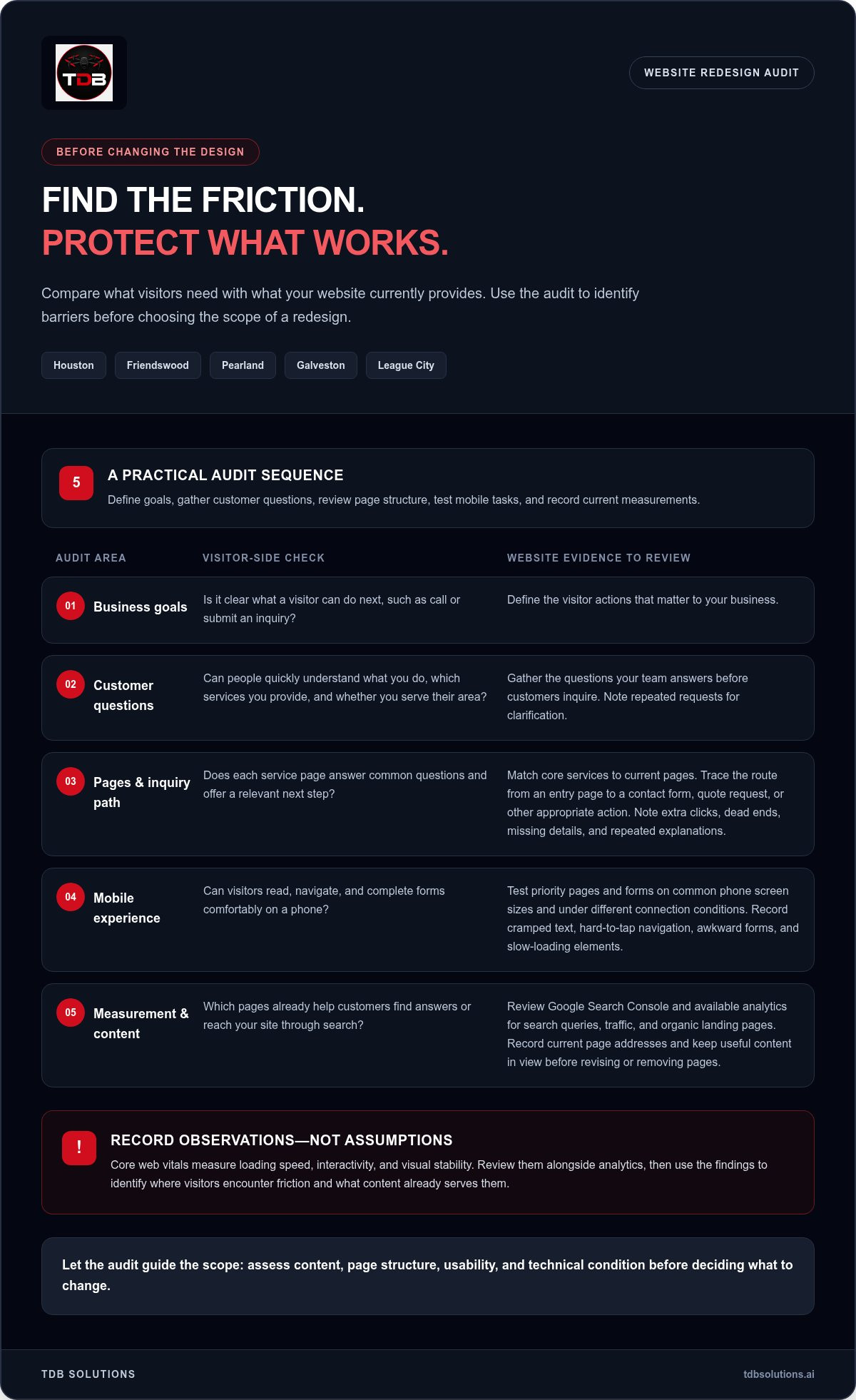
- Business goals: Decide which visitor actions matter, such as calling or submitting an inquiry.
- Customer questions: Gather the questions your team answers most often.
- Page structure: Check whether each important page supports a clear customer decision.
- Mobile experience: Test navigation, text, and forms on a phone.
- Measurement: Record the pages and search traffic you’ll want to review after changes.
For more detail on mobile priorities, read the Houston mobile-first web design guide. Use your audit findings to define the barriers to fix before deciding how much of the site to change.
How to Audit a Houston Website Before Starting a Redesign
Turn your initial findings into a practical audit before deciding what to change. For a website redesign Houston TX project, follow a clear sequence: define business goals, gather customer questions, review page structure, test the mobile experience, and record current measurements. This connects design decisions to what visitors need and what your business needs the site to do.
A useful redesign audit protects content that already serves customers and preserves search visibility while identifying what needs to change. Don’t assume every old page should disappear. Some pages may answer important questions or attract visitors through search. Document what each page contributes before you revise, combine, or remove it.
How do you assess content, navigation, and inquiry paths?
List your core services, then match each one to a current page. Check that the page accurately describes the service, answers common questions, and gives visitors a relevant next step. A page that names a service but offers little detail or no clear way to inquire may need stronger content or a clearer path forward.
Next, trace a visitor’s route from an entry page to a contact form, quote request, or other appropriate action. Note extra clicks, dead ends, repeated explanations, missing details, and claims that no longer reflect the business. A key page should help a visitor make a decision, not leave them guessing about what to do next.
How should you check mobile experience and website performance?
Test priority pages and forms on common phone screen sizes. Try them under different connection conditions, too. Look for hard-to-read text, awkward menus, slow-loading page elements, and forms that make it difficult to submit an inquiry. Record what you observe rather than relying on appearance alone.
Review core web vitals, performance metrics for loading speed, interactivity, and visual stability, alongside available analytics. These measures can help you identify user experience issues, but they don’t guarantee search rankings or business results. Keep a record of current page addresses and important organic landing pages before planning changes. That baseline helps you track what changed, what stayed useful, and where visitors still encounter friction.
- Goals: Define the actions the site should support.
- Questions: Gather what customers need to know before they inquire.
- Structure: Check whether each service has a clear, relevant page.
- Mobile and measurement: Test key tasks and record current performance and landing pages.
With a clear audit in hand, you can plan changes around evidence instead of guesswork. If you’re ready to connect those findings to a custom mobile-first website, explore TDB Solutions website design.
Refresh or Rebuild? Choose the Right Website Redesign Scope
An outdated look doesn’t automatically mean you need a brand-new website. If your pages still support your services, visitors can find what they need, and the site works well on mobile, a focused refresh may address the main issues. If navigation, content, and usability problems run across the whole site, rebuilding may give you a clearer way to organize the experience.
Compare the options against your audit findings, not a predetermined preference for a larger project. In a website redesign Houston TX plan, the right scope depends on how well the current site supports your business goals.
Focused refresh may fit when: Your core page structure works, useful content remains accurate, and most problems involve visual consistency, messaging, or a limited number of pages.
Full rebuild may fit when: The navigation confuses visitors, the page structure no longer reflects your services, mobile use feels difficult across the site, or the existing technical setup limits needed changes.
When can a focused website refresh make sense?
A refresh can be practical when the foundation still serves customers. For example, your service pages may be easy to find, but outdated visuals and inconsistent branding make the business feel unclear. In that case, updated graphic design, stronger messaging, and revisions to selected pages may bring the site into better alignment without rewriting every page.
Keep useful content and existing page paths in view as you plan. Before changing a URL or removing a page, consider whether it answers customer questions or brings relevant visitors to your site. Retain what works, then focus the refresh on specific gaps.
When might a full website rebuild be the clearer path?
Consider a rebuild when problems connect across the site. If visitors can’t move from a service page to an inquiry, mobile navigation is difficult throughout, or the current structure no longer reflects what your business does, isolated updates may leave the underlying issues in place. A new structure can give each service and next step a more logical place.
Use this comparison to guide your decision:
- Content quality: Refresh if most content remains useful and needs targeted edits. Rebuild if key information is outdated, incomplete, or organized around services you no longer emphasize.
- Site structure: Refresh if visitors can find important pages. Rebuild if the menu and page relationships make services hard to understand.
- Usability: Refresh if issues affect a few pages. Rebuild if navigation, forms, or mobile use create friction across the site.
- Technical condition: Refresh if the current setup supports the changes you need. Rebuild if it prevents you from creating a site structure and experience that fit your goals.
Neither option guarantees more inquiries, stronger rankings, or faster performance. Let the audit determine the scope. Choose the smallest project that can address the actual problems, and expand it only when the site’s structure or technical condition calls for broader change.
Plan a Houston Website Redesign Around Local Customers
A local visitor needs to quickly see whether your business fits their needs. Make your location, primary services, service area, and best way to start an inquiry easy to find. For businesses serving Houston, Friendswood, Pearland, Galveston, and League City, clear service-area details help visitors understand where you work without searching through several pages.
Be specific about what you do. Replace broad claims like “we deliver the best results” with clear descriptions of your services and the problems they address. Keep location details accurate and consistent across relevant pages. If your service area or process differs by service, explain that plainly.
What local information should a redesigned business website make clear?
Put practical answers where customers can find them: your business location, communities you serve, primary services, and the next step for an inquiry. A phone-friendly contact path matters, too. Make contact details easy to tap, keep forms straightforward, and explain what information to include so a prospective customer can reach you without unnecessary friction.
Visual consistency reinforces recognition across the site. Coordinated colors, typography, logos, and imagery can help your pages feel like parts of the same business. Use the same visual rules across service pages, contact details, and calls to action so visitors can recognize your brand as they move through the site.
How can you protect useful pages during a redesign?
Before changing the site, inventory page addresses and flag pages with useful content or organic visits. When a page address changes, plan a redirect to the most relevant replacement page. Then test internal links so visitors don’t land on broken pages or follow outdated paths.
Use this pre-launch checklist to catch common gaps:
- Content: Confirm service descriptions, location details, contact information, and calls to action are accurate.
- Mobile layouts: Check that text, menus, buttons, and key page elements work on phone screens.
- Forms: Submit each form and confirm its fields and confirmation message make sense.
- Page links: Test internal links and redirects, especially for pages with changed addresses.
- Analytics: Confirm your measurement tools still record important visits and inquiry actions after launch.
A website redesign Houston TX project should make it easier for local customers to understand your services and take the next step, while preserving useful pages and a consistent visual identity. If you’re planning a mobile-first redesign, explore custom website design with TDB Solutions.
How TDB Solutions Builds a Custom Website Redesign for Houston Businesses
Once you know what your site needs, turn those findings into a focused plan. TDB Solutions serves Houston-area businesses with custom mobile-first websites designed around usability, clear messaging, and practical page structure. The goal is a site that helps visitors understand your services and find a relevant next step, whether they’re browsing from Houston, Friendswood, Pearland, Galveston, or League City.
A website redesign Houston TX project should reflect your business, not follow a preset template. TDB Solutions shapes the scope around your goals, existing site, content needs, and the actions you want customers to take. That may mean refining key pages or planning a new structure when the current one no longer supports your business.
What can TDB Solutions bring to a website redesign?
Custom mobile-first website design connects page structure to the way people use your site on phones and desktop screens. Clear service descriptions, readable layouts, and well-placed inquiry options help visitors follow the path that matters to your business. Each design decision should support a real customer need, not add visual elements without purpose.
In-house graphic design and branding can bring your website’s logo, colors, typography, and other visual assets into a consistent digital identity. Content creation and marketing media production can support that same goal. A service page, for example, may need clearer written information, while a relevant photo or video can help explain the work. Make sure each piece of content and media fits the audience and the page’s purpose.
What should you prepare for a redesign conversation?
Bring your current website pages, business priorities, key services, and the questions customers commonly ask. Identify which pages matter most and what actions you want visitors to take, such as calling, submitting an inquiry, or reviewing a service. This gives the redesign discussion a clear starting point and keeps decisions grounded in your business needs.
- Current site: Share the pages and sections you want to retain, revise, or rethink.
- Business priorities: Name the services and audiences the website should make clear.
- Customer questions: Note what visitors need to know before they reach out.
- Next steps: Identify the inquiry actions that should be easy to find and complete.
Ready to bring your structure, visual identity, and customer journey into better alignment? Discuss a custom website redesign with TDB Solutions.
Build a Website That Makes the Next Step Clear
A successful redesign starts with diagnosis, not decoration. Audit customer friction, useful content, mobile usability, and the path to an inquiry before deciding whether a focused refresh or a full rebuild makes sense. Then shape each key page around what local customers need to understand and do.
For a website redesign Houston TX project, the right plan connects practical structure with consistent visuals. TDB Solutions brings custom mobile-first website design together with in-house graphic design and branding, serving Houston, Friendswood, Pearland, Galveston, and League City. Content and media can also support the site when they serve its audience and purpose.
You don’t have to plan every detail alone. Bring your current pages, business priorities, and customer questions to the conversation, then map out a redesign scope that fits your goals. Discuss your Houston website redesign with TDB Solutions and take the next step toward a clearer online experience for your customers.
Frequently Asked Questions
Does my Houston business need a website redesign or just a refresh?
Choose a focused refresh if your page structure, navigation, and mobile experience still serve customers, but selected visuals, messages, or pages need attention. Consider a rebuild if structural or technical problems affect the whole experience. For a website redesign Houston TX, base the scope on an audit of goals, content, usability, and site condition, not appearance alone. Preserve useful pages either way.
How do I know if my website is mobile-friendly?
Test your important pages on a phone, including the menu, service information, and contact forms. Check whether text is easy to read, buttons are simple to tap, and visitors can complete an inquiry without awkward scrolling or zooming. Try more than one common screen size. Also review core web vitals and available analytics to spot performance issues that may affect the mobile experience.
Will a website redesign hurt my Google rankings?
A redesign can affect search traffic if useful pages disappear, page addresses change without redirects, or content that attracts visitors gets removed. No redesign can guarantee a ranking outcome. Before launch, record important pages and organic landing pages, retain or improve useful content, plan redirects for changed addresses, and test internal links. After launch, review Google Search Console and analytics to watch for changes.
What should a Houston business include on its redesigned website?
Make your primary services, business location, service area, and contact options easy to find. If you serve Houston, Friendswood, Pearland, Galveston, and League City, state those locations accurately on relevant pages. Add clear service descriptions that answer customer questions, useful business information, and a direct next step, such as calling or submitting an inquiry. Keep the mobile layout simple to use.
Can I keep my existing website content during a redesign?
Yes. Review your current content and keep pages that remain accurate, useful to customers, or important to organic visits. Update information that no longer reflects your services, and revise unclear sections rather than replacing everything by default. If you change a page address, plan a redirect to its relevant replacement. This helps visitors and search engines find the updated content.
Can TDB Solutions coordinate website design and branding?
Yes. TDB Solutions coordinates custom mobile-first website design with in-house graphic design and branding. This helps align page layouts, messaging, and visual elements so your website feels consistent with your business identity. The team can also incorporate content creation or marketing media production when it supports the site’s audience and purpose. TDB Solutions serves Houston and surrounding communities, including Friendswood, Pearland, Galveston, and League City.


