

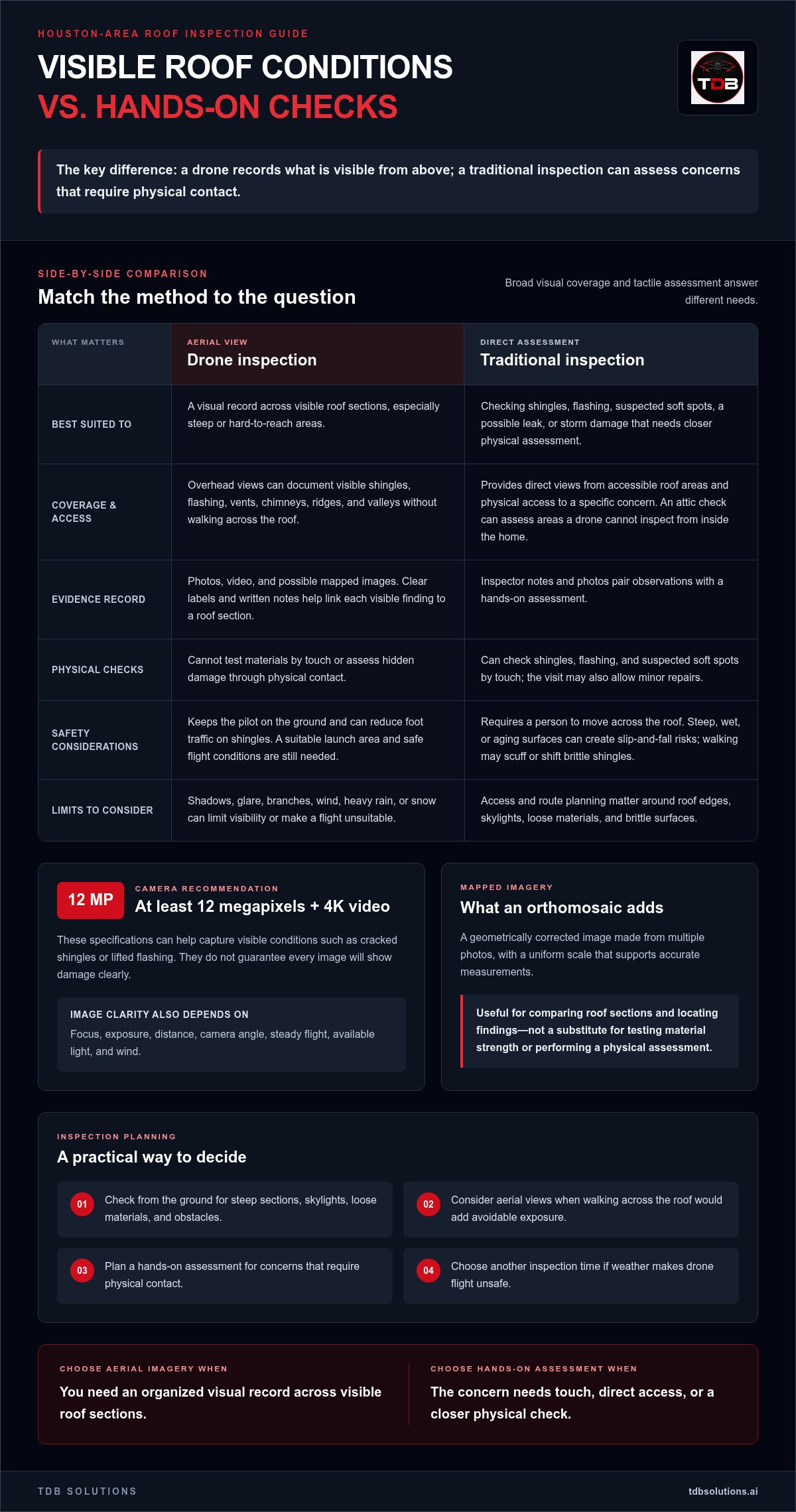
For a Houston-area home, choose a drone inspection vs traditional roof inspection based on what you need: a drone provides a visual record of the roof, especially where steep or hard-to-reach areas make access difficult. A traditional inspection is more useful when someone needs to check shingles, flashing, or suspected soft spots by touch, or investigate a possible leak or storm damage. The key difference is whether you need clear images from above or a hands-on assessment.
It makes sense to want a clear view of your roof without adding unnecessary risk or overlooking hidden damage. Drone inspections capture high-resolution photos and video of visible roof conditions, but they can’t test materials by touch or inspect the roof deck from inside your home. A traditional inspection can assess those areas directly and may allow minor repairs during the visit.
This guide compares both methods for visible conditions, safety, image quality, speed, and coverage. You’ll learn when a drone is practical, when an in-person inspection is more useful, and how a hybrid approach can combine the two.
Key Takeaways
- Use aerial images to review visible roof areas without walking across the surface.
- Choose an in-person inspection when you need hands-on checks for soft spots or hidden damage.
- Compare image detail, flight stability, and access around roof obstacles when judging drone footage.
- Consider a hybrid inspection when aerial images reveal areas that need closer physical assessment.
- Match the inspection method to your concern, whether you need broad visual coverage or a tactile check for a suspected problem.
Drone imagery and visible roof conditions
Drone images provide an overhead record of visible roof features, such as shingles, flashing, vents, and chimneys. A useful inspection record ties each image to a specific roof section, so you can locate a finding later. Ask for clear labels and written notes describing what each photo shows.
Image quality depends on the camera, pilot skill, and image-analysis software. A close view of a roof edge may reveal a lifted shingle, while a wider shot can show its position relative to a valley or chimney. Shadows, glare, and branches can obscure details, so context matters as much as zoom.
Drone footage may include both photos and video. Photos document specific conditions, while video can show how roof sections relate as the camera moves around the structure. A detailed record should identify visible concerns and note areas the imagery does not clearly show.
Mapping software can combine aerial images into a roof map. An orthomosaic is a geometrically corrected image made from multiple photos, with a uniform scale that supports accurate measurements. It can help you compare roof sections and locate findings. Image-based mapping supports visual review, but it does not establish material strength or replace a physical assessment.
Will homeowners insurance accept drone roof inspection reports? Drone imagery can document overall roof condition for insurance purposes. Keep the written report with its labeled photos so each visible finding is linked to the area shown.
Organize inspection deliverables around the decisions you need to make. Separate broad roof views from close-ups, label each area, and note where shadows or obstructions limit visibility. Consistent labels also make it easier to compare records, find the same roof section, and track changes over time.
| Inspection option | Visible coverage | Image record | Measurement use |
|---|---|---|---|
| Drone imagery | Overhead views across visible roof sections | Photos, video, and possible mapped images | Supports visual comparison and documentation |
| Traditional inspection | Direct views from accessible roof areas | Inspector notes and photos | Pairs observations with hands-on assessment |
Choose drone imagery for an organized visual record across roof sections; choose a hands-on inspection when the concern requires physical assessment.
Safety risks of traditional roof inspections
A manual inspection puts a roofing professional on the roof to assess its condition directly. Moving across a steep, wet, or aging surface carries a risk of slips and falls. Walking can also scuff or shift brittle shingles. Access planning matters, particularly around roof edges, skylights, and loose materials.
Risk depends on roof pitch, surface condition, weather, and the route to the inspection area. A ladder provides access, but the inspector must also move safely between roof features. Reaching a damaged section beside a skylight, for example, takes careful route planning. An attic inspection brings different concerns, including tight spaces and limited visibility.
What are the safety risks of drone and traditional roof inspections? A traditional inspection exposes the person on the roof to fall hazards and may disturb brittle shingles. A drone keeps the pilot on the ground, but wind, heavy rain, and snow can make a safe flight impossible.
A drone can reduce the need to walk across roof sections, limiting foot traffic on shingles, but it does not remove every safety concern. The pilot needs a suitable launch area and a clear route. High winds, heavy rain, and snow can make an aerial inspection unsuitable.
Use these practical steps to plan a safer inspection:
- Look from the ground for steep sections, skylights, loose materials, and obstacles.
- Consider aerial views when walking across the roof would add avoidable exposure.
- Plan a hands-on assessment for concerns that require physical contact.
- Choose a different inspection time if weather makes drone flight unsafe.
A traditional inspection provides direct access to a specific concern and may allow minor immediate fixes, such as securing a loose nail or resealing a vent. Hands-on access helps when a roof feature needs physical assessment. On an older, brittle surface, careful foot placement remains important throughout.
To make a safety-focused choice, consider the access route, surface condition, and assessment needed. Aerial views can reduce foot traffic on the roof, while a manual inspection can address concerns that require direct contact.
Camera resolution, flight stability, and obstacle avoidance
Camera resolution affects how clearly roof details appear when you zoom in. A camera with at least 12 megapixels and 4K video capability is recommended for roof inspections. Those specifications can help capture visible conditions, such as cracked shingles or lifted flashing, but they don’t guarantee every image will show damage clearly. Focus, exposure, distance, and camera angle also shape the final visual record.
Flight planning starts with the roof layout. The pilot identifies target areas, such as ridges, valleys, vents, and skylights, then plans useful views of each. A straight overhead frame may show a broad section, while an angled view can reveal raised edges or surface changes. Consistent framing makes images easier to compare and analyze.
Stable flight matters because camera movement can blur details. A steady hover and controlled movement help capture sharper images, especially when documenting a narrow roof feature. Before flying, the pilot should consider wind, available light, and a clear takeoff area. These conditions affect how reliably the planned passes can be completed.
Obstacles shape the flight path. Tree branches, overhead wires, chimneys, and nearby buildings can block the camera’s view or limit the drone’s route. Separate passes around obstructions can be more useful than relying on one wide sweep. If a tree hides a roof valley, the image record should make that limitation clear rather than imply full visibility.
A practical pre-flight sequence helps protect image quality:
- Identify roof sections and features that need close visual coverage.
- Note obstructions that could block the camera or constrain the flight path.
- Set camera angles and capture overlapping views for later review.
- Review sample images before leaving the site, then recapture unclear areas when conditions allow.
Flight planning must also account for FAA requirements. In the United States, commercial drone operators conducting roof inspections must hold FAA Part 107 certification. Before flight, the pilot should assess the intended route and applicable airspace restrictions. A flight plan may need adjustment if nearby airspace limits operations or surrounding structures block a safe path. Certification does not remove the need to plan each site carefully.
When reviewing a roof inspection, look beyond camera specifications. Check whether the images clearly show the intended areas, whether shadows or obstacles obscure details, and whether the views support the report’s findings. A well-planned flight connects each image to a specific inspection goal.
Drone inspection speed and coverage
Drone flights can reduce the time needed to view roof sections, while traditional inspections allow direct, hands-on checks. For homeowners in Houston, Friendswood, Pearland, Galveston, and League City, compare how quickly each method covers the roof and what it can actually assess.
Inspection Speed
A licensed pilot can scan an average home roof by drone in 15-20 minutes. A traditional inspection takes longer in the field because the inspector must access the roof and move across its surface. On larger or more complex homes, aerial coverage can be especially efficient. But flight time is only one part of the process: reviewing and organizing images also takes time.
Inspection data review is listed as taking 30 minutes. Treat that separately from the flight itself. Software review can help organize images, while annotations and a written report make findings easier to use for maintenance planning. If a photo reveals a concern that needs physical testing, a later hands-on assessment adds another step.
Access and Coverage
A drone can capture steep gables and roof areas above fragile skylights without requiring someone to walk across them. Overhead coverage is useful when access is difficult or foot traffic could disturb shingles. A traditional inspection provides direct access when someone needs to feel suspect decking or assess material by touch.
Coverage depends on roof shape, obstacles, and the level of detail needed. Tree branches may block an aerial view of a valley, for example, while a chimney can restrict the view from one side. A proper flight plan accounts for obstructions and identifies areas that need another pass or a different inspection method.
Flight duration also sets practical limits. A drone with at least 25 minutes of flight time is considered long enough to map a 30,000-square-foot roof at the desired image detail. That example describes mapping capacity, not a fixed inspection time for every home. Roof layout, camera detail, wind, and obstruction avoidance all affect how the pilot plans the flight.
For a useful comparison, distinguish image-capture time from review time. A drone can quickly capture broad surface views, then software can help organize the record. A manual inspection takes time to access and traverse the roof, but can assess soft spots that images cannot reveal. Neither method automatically covers hidden areas, such as the underside of roof decking inside the home.
Use this decision sequence:
- Choose drone coverage when the priority is a fast visual record of broad or hard-to-reach roof areas.
- Choose hands-on assessment when a concern requires physical contact or a direct check of decking.
- Combine methods when aerial images identify a specific location that needs closer examination.
For routine maintenance records, aerial coverage can make visible changes easier to track. For suspected structural damage, direct assessment adds information a flight cannot capture.
Drone and traditional roof inspection methods
Drone inspections capture roof conditions from above; traditional inspections involve someone examining the roof directly. The right method depends on whether you need visual documentation, hands-on assessment, or both.
How does drone roof inspection compare with traditional roof inspection? A drone records visible conditions across roof sections without anyone walking on the surface, while a traditional inspector can assess materials by touch. A hybrid inspection can start with aerial imaging, followed by a technician assessing areas the images flag.
Drone Roof Inspection
A drone roof inspection uses a camera-equipped aircraft to capture photos or video of shingles, flashing, vents, and other visible features. The pilot plans views around the roof layout and nearby obstacles, then organizes the images into a report. Unlike a manual inspection, this method can document steep gables or areas above fragile skylights without placing an inspector on those surfaces.
The limitation is clear: imagery cannot detect soft spots by touch, lift shingles, or assess sealant integrity physically. Photos also cannot show the underside of the roof deck inside the home. Treat drone findings as a visual record, not proof of hidden material condition.
Traditional Roof Inspection
A traditional inspection involves an inspector accessing the roof, often by ladder, to check shingles, flashing, vents, and chimneys directly. The inspector can look for missing, cracked, curled, or blistering shingles, then press suspect areas to assess soft spots. This hands-on access distinguishes the method from aerial imaging, which documents the surface but cannot test it physically.
Direct access may also allow small immediate fixes, such as securing a loose nail or resealing a vent. However, walking on an older, brittle roof can scuff or dislodge shingles. A traditional inspection may also include attic checks for stains, moisture, mold, mildew, sagging decking, ventilation problems, or pests.
The methods answer different questions. A drone can capture broad visible conditions and create a record for later comparison. A manual inspection can investigate material integrity and concerns inside the home. For example, images may show a lifted shingle, but a hands-on assessment can check whether the nearby surface feels soft or shows damage the camera cannot confirm.
Use a hybrid approach when aerial images identify an area for closer examination. The drone provides an overview first; a technician can then focus on flagged locations rather than walking every section without direction. This sequence documents roof condition while keeping the physical inspection targeted.
Choose aerial imaging for a visual overview, traditional inspection for tactile checks, and both when visible concerns need hands-on assessment. Request an aerial roof inspection to document visible roof conditions from above.
TDB Solutions: Construction Intelligence
TDB Solutions provides aerial documentation and Construction Intelligence for organized visual records of properties and projects. Its Aerial Inspections capture roof conditions from above, helping document visible areas beyond ground-level views.
For a home inspection, aerial images support a visual record but do not replace hands-on checks for soft spots, hidden leaks, or interior damage. For construction teams, TDB Solutions’ Construction Intelligence turns site imagery into useful progress information. The right next step depends on whether you need roof-condition documentation, ongoing site records, or both.
If aerial roof documentation fits your needs, contact TDB Solutions or visit tdbsolutions.ai.
Plan the Next Step for Your Roof
Before arranging an inspection, note which roof areas you want documented and what decisions the record should support. A short list of priorities can guide the scope, from documenting visible conditions to identifying areas that need closer attention. Keep the resulting images and notes together for future maintenance planning.
Your drone inspection vs traditional roof inspection decision can fit into a wider property or project workflow. TDB Solutions offers Aerial Inspections and Construction Intelligence, as well as Custom Mobile-First Websites and Marketing Media Production. These services support aerial documentation and business communications; roof imagery remains a visual record, not a hands-on diagnosis.
Bring your roof documentation goals and project context to the conversation. Contact TDB Solutions about aerial inspection support. A clear plan helps you move forward with confidence.
Frequently Asked Questions
So, Which One Should You Choose for Your Houston-Area Home?
Choose a drone inspection for a routine visual record, especially when you want to review roof sections without walking across them. Choose a traditional inspection if you suspect storm damage, a leak, or a soft spot requiring physical assessment. If aerial images reveal a concern, a hybrid approach can direct a closer inspection to that area instead of treating every roof section alike.
How accurate are drone roof inspections compared with hands-on inspections?
Drone inspections can clearly document visible roof conditions when images show the relevant areas in sharp detail. Hands-on inspections add information images cannot provide, such as whether a suspect section feels soft. Accuracy also depends on camera quality, pilot skill, flight angle, and image review. Compare the report’s photos with its written findings, and note any roof sections the images do not clearly show.
How long does a drone roof inspection take versus a traditional inspection?
A licensed pilot can scan an average home roof by drone in 15-20 minutes; traditional inspections have a listed field time of 45-90 minutes. Those figures describe field time, not the full process from booking through report delivery. Roof layout, access, weather, and the amount of image processing affect the overall schedule. Reviewing images and preparing findings add work after the flight.
What roof damage can drones detect, and what requires a close-up inspection?
Drone images can reveal visible problems such as missing, cracked, or curled shingles, damaged flashing, and debris. A close-up, hands-on inspection is needed to test soft spots, lift shingles, or assess sealant integrity. A photo may show a lifted shingle, for example, but cannot establish whether the decking underneath feels weak. An attic inspection can also identify interior signs such as moisture stains or sagging decking.
Do drone roof inspections require property owner permission or local permits?
Permission to enter or launch from private property is separate from FAA airspace restrictions and local permit requirements. Before a flight, establish the launch location, access arrangements, and applicable municipal rules for the property address. A drone’s ability to photograph a roof does not by itself determine whether a flight meets local requirements. The property location and planned flight area matter.
When should a homeowner choose a drone inspection versus a traditional roof inspection?
Choose a drone for a broad visual record, routine documentation, or areas that are difficult to reach safely. Choose a traditional inspection when someone needs to assess materials by touch or investigate a suspected leak. If aerial images point to a concern, combine both methods so the close-up inspection can focus on that location. Homeowners in Houston, Friendswood, Pearland, Galveston, and League City can use the same criteria.
What does a drone roof inspection typically cost in the United States?
When comparing drone inspection vs traditional roof inspection options, a standard drone roof inspection typically ranges between $150 and $400 for residential properties. Pricing through providers like TDB Solutions varies based on the size of the roof, pitch complexity, and geographic location, often serving as a cost-effective alternative for routine assessments.
What does a traditional roof inspection typically cost in the United States?
A standard traditional or manual roof inspection generally costs between $200 and $500 for a typical residential home. While physical walk-throughs and hands-on evaluations by TDB Solutions may carry a slightly higher price tag due to the labor-intensive nature of walking the roof, they remain essential for detailed structural diagnostics and warranty verifications.


