

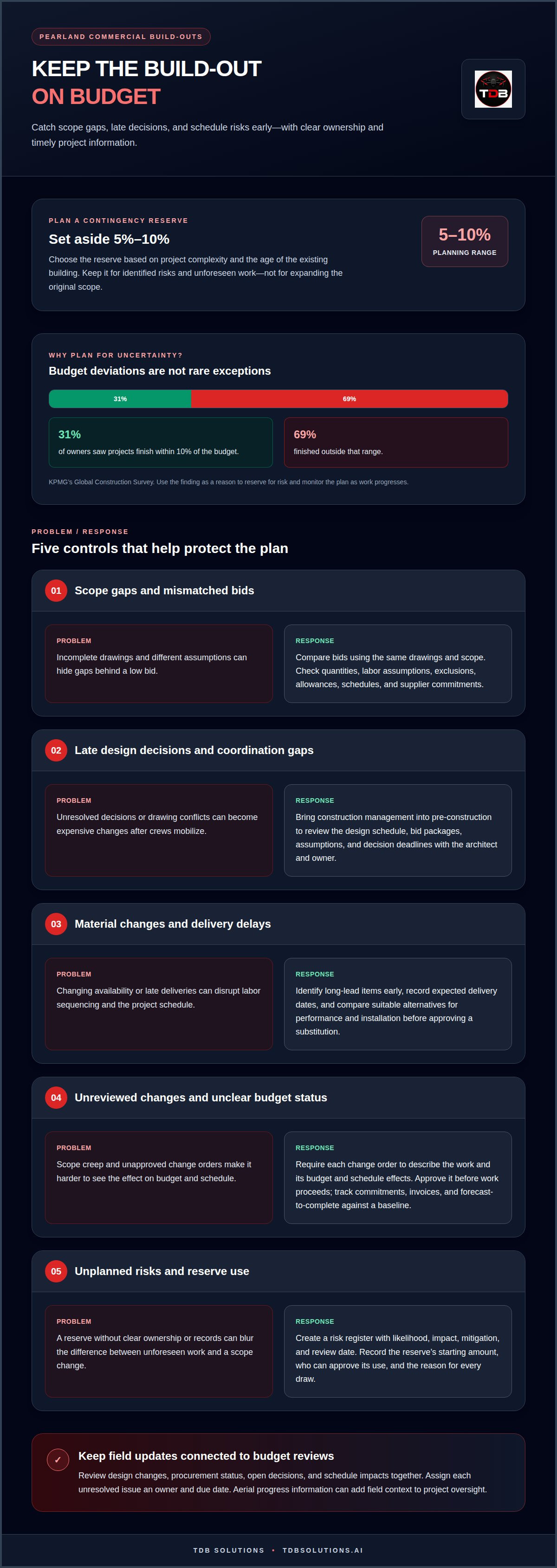
Preventing budget overruns on commercial builds in Pearland starts before construction: define the scope, coordinate design decisions, and track actual spending against the budget as work progresses. Set aside a contingency of 5% to 10%, based on the project’s complexity and the age of the existing building. Bring construction management into planning early enough to surface risks before they become costly changes.
A detailed estimate alone will not keep a project on budget. Incomplete drawings, late design decisions, changing material prices, and unreviewed change orders can all increase costs. Clear ownership and timely information help your team address issues while there is still time to respond.
This guide covers how to build a realistic budget, when to involve a construction manager, and how to track spending and manage scope changes. It also explains how coordinating design, engineering, and construction can reduce communication gaps and clarify accountability on a Pearland build-out.
Key Takeaways
- Compare bids by scope, assumptions, and exclusions, not just the bottom line. Set a clear process for reviewing change orders before work begins.
- Bring construction management into pre-construction planning to flag drawing gaps, risks, and coordination issues early.
- Track actual spending against the plan and keep contingency available for identified risks and unexpected conditions.
- Coordinate design, engineering, and construction with clear accountability. Construction Intelligence can add aerial progress insights to project oversight.
1. How Do You Avoid Going Over Budget on a Commercial Build-Out?
To prevent budget overruns on commercial builds in Pearland, define the scope before comparing bids. Common cost drivers include design changes, incomplete plans, differing site conditions, quantity changes, and schedule impacts. The U.S. Environmental Protection Agency groups construction changes into six categories. Use that framework to identify risks, assign responsibility, and document decisions before work begins.
Compare contractor bids using the same drawings and scope, not just the total price. Check quantities, labor assumptions, exclusions, allowances, schedules, and supplier commitments. A low bid may exclude finish work or rely on later change orders. Resolve differences before selecting a contractor so each proposal reflects consistent assumptions.
Material prices and availability can change between planning and purchasing. Identify long-lead items early, record expected delivery dates, and consider equivalent materials if a specified product becomes unavailable. Compare performance and installation requirements before approving a substitution. Track procurement alongside the schedule because delayed deliveries can disrupt labor sequencing.
For permits and inspections in Pearland, identify which approvals and inspection stages apply to the project’s scope and site. Coordinate these steps with the relevant city departments during planning. Zoning, drainage, and utility conditions can affect site work, design, and scheduling, so include known constraints in the project plan before construction starts.
Estimate the build-out using coordinated drawings, quantity takeoffs, current subcontractor input, material specifications, and a realistic schedule. A standard commercial build-out contingency is 5% to 10%, depending on project complexity and the existing building’s age. Preventing budget overruns on commercial builds in Pearland also means controlling scope creep: require each change order to describe the work and its budget and schedule effects, with approval before work proceeds. Review spending against the plan regularly, and document design revisions before ordering materials or changing field work.
2. When should a construction manager be brought into a commercial build-out project?
Bring a construction manager into pre-construction, while the owner can still shape scope, sequencing, and procurement. Early construction management helps prevent budget overruns on commercial builds in Pearland by surfacing coordination gaps before crews mobilize. Ask the manager to review the design schedule, bid packages, assumptions, and decision deadlines with the architect and owner.
A cost overrun occurs when actual spending exceeds the approved estimate. Set a budget baseline and track commitments, invoices, and forecast-to-complete against it. A cost log or project management platform can flag variances before the final account. At each review, record the cause, assign an owner, and note the action needed to keep the forecast realistic.
Use pre-construction to identify equipment that needs early procurement. In 2026, commercial electrical switchgear, transformers, rooftop HVAC systems, and generators can have lead times of multiple months. Build procurement dates into the schedule, coordinate submittals, and compare suitable alternatives early. A late equipment decision can force trade resequencing and push other work into a less efficient order.
Finalize design decisions before construction, then hold a constructability review with the people responsible for installing the work. For example, review HVAC zoning and pipe routing together to catch conflicts before ceilings close. Value engineering can also compare a custom curtain wall with a standardized modular system, weighing design intent, performance, and installation needs before approving a change.
For preventing budget overruns on commercial builds in Pearland, connect jobsite updates with budget reporting. Review design changes, procurement status, open decisions, and schedule impacts in the same project meeting. Assign each unresolved issue a decision-maker and due date. Aerial progress information can add field context to those reviews; discuss visual documentation for your project when jobsite visibility would help.
3. How common are construction budget deviations?
Budget deviations are common enough to plan for, not treat as rare exceptions. KPMG’s Global Construction Survey found that 31% of owners saw projects finish within 10% of budgeted cost. That leaves 69% outside that range. For Pearland construction projects, the practical lesson is to set a contingency reserve and track its use against actual project conditions.
A contingency is funding set aside for identified risks and unforeseen work, not for expanding the original scope. Set the reserve during planning, using the building’s condition, design completeness, procurement risks, and schedule exposure. A 5% to 10% contingency is a standard build-out planning range; project complexity and the existing building’s age guide where the reserve falls within it. The 10% end may fit a project with more uncertainty than a straightforward interior renovation.
Manage contingency as a reserve. Document its starting amount in the budget, identify who can approve its use, and record the reason for each draw. If concealed conditions require extra work, log the change separately from planned work. This helps show whether the estimate missed a risk or the owner approved a scope change.
Turn uncertainty into specific actions with a risk register created before construction. For each risk, record its likelihood, impact, mitigation, and review date. For example, if records for an existing building are incomplete, schedule investigations before finalizing the work plan. If a delivery could disrupt sequencing, identify an alternative material or adjust procurement timing. Review risks at project meetings and update the forecast when conditions change.
At every reporting cycle, compare the approved budget with commitments, invoices, and forecast-to-complete. If actual spending or projected commitments exceed a line item, identify the cause and response before using contingency. Show reserve use in owner reports. This gives decision-makers a clear view of remaining capacity and helps distinguish an emerging budget problem from a planned contingency draw.
4. Design-build coordination and accountability
Design-build brings design, engineering, and construction together under one team. This gives Pearland project owners a clearer path to resolving conflicts before they cause delays. Instead of passing questions between separate groups, the team can review the same plans, schedule, and field conditions. Assign clear ownership for approving design decisions, tracking revisions, and communicating changes.
Coordination works best when teams define deliverables and decision points early. Establish a process for reviewing drawings, recording revisions, and confirming each change’s effect on scope and schedule. For example, if a mechanical route conflicts with a structural element, bring designers and construction leads together before installation. Resolving the conflict on paper can prevent rework after crews mobilize.
Integrated project delivery methods, including CMAR, reduced cost growth by an average of 4.7% compared with traditional delivery. That figure describes an average comparison, not a promised result for every build. The practical takeaway is to connect planning with field execution, then make accountability visible through decision logs, assigned owners, and timely updates.
Use project management software to connect field operations with office planners through timely jobsite information. Pair daily field observations with drawing revisions, procurement updates, and the current schedule. If installed work differs from the plan, record the location, responsible team, and decision needed. This gives stakeholders specific information to act on instead of leaving them to discover the conflict during a later walkthrough.
For a Pearland build-out, establish one reporting rhythm that shows design decisions, open issues, schedule impacts, and budget status together. Review unresolved items at each coordination meeting and assign a deadline and decision-maker. This keeps small questions from becoming costly redesigns or delays. To strengthen project visibility, discuss visual documentation for your project with a local team.
TDB Solutions: Construction Intelligence
TDB Solutions provides Construction Intelligence for owners who need clearer visibility into active jobsites. Aerial documentation and site progress reports help your team review field conditions alongside project updates. Volumetric measurements and overhead views add useful context when a ground-level visit leaves questions about site activity.
Consider this support when you need consistent visual records, want to monitor progress across a commercial build, or need shared information for project discussions. Aerial data can inform oversight, but it does not replace construction management, budget tracking, design coordination, or change-order approvals. It gives project stakeholders another practical view of work as it progresses.
To discuss Construction Intelligence for a commercial project in Pearland, contact TDB Solutions or visit tdbsolutions.ai.
Keep Your Next Pearland Build Moving With Clear Project Visibility
Schedule the next step: align your project team around decisions, records, and progress updates that keep work visible. A shared view helps owners connect field activity with the information needed to plan what comes next. That discipline supports preventing budget overruns on commercial builds in Pearland without relying on last-minute fixes.
When aerial progress information would help your team assess a jobsite, TDB Solutions’ Construction Intelligence adds visual context to project oversight. TDB Solutions also offers Custom Mobile-First Websites and Marketing Media Production for businesses looking to strengthen their digital presence alongside their project work.
Bring your project goals and questions to the next conversation. Contact TDB Solutions about your project, and take the next step with a clearer view of the work ahead.
Frequently Asked Questions
What Are Cost Overruns?
Cost overruns occur when final spending exceeds the approved project budget. To understand the variance, separate it into approved scope changes, estimating gaps, schedule impacts, and unexpected site conditions. For example, if revised mechanical plans add work, record that change separately from a quantity missed in the original estimate. This breakdown helps owners choose corrective actions rather than treating every variance as the same problem.
How Do You Avoid Going Over Budget on a Commercial Build-Out?
Define the scope, compare bids using matching assumptions, and keep a decision log before construction starts. During the work, review commitments and invoices against the approved budget, then resolve variances with the responsible team. For example, if a finish selection changes, record the replacement, schedule effect, and approval before ordering. These habits help distinguish necessary revisions from avoidable scope creep and address changes before they spread across trades.
How common are construction budget deviations?
Roughly 35% of commercial construction projects exceed their budgets. That makes budget control a routine management task, not a final-stage review. Owners can respond by setting regular reporting dates and reviewing committed spending as well as paid invoices. A subcontractor commitment may affect the forecast before an invoice arrives. Tracking both helps reveal pressure earlier and gives the team time to adjust sequencing or scope.
What is a Guaranteed Maximum Price (GMP) contract and how does it protect owners?
A Guaranteed Maximum Price contract sets a maximum amount the owner pays for defined construction work, subject to the contract’s terms. It can provide a clearer spending limit, but it does not automatically cover every change or unknown condition. Review how the agreement treats allowances, exclusions, owner-requested revisions, and unused contingency. For example, a requested finish upgrade may change the contract amount if the agreement allows it.
When should a construction manager be brought into a commercial build-out project?
Involve a construction manager during pre-construction, before design and procurement decisions become difficult to change. Early coordination helps bring together architect input, subcontractor estimates, sequencing, and delivery needs. For a tenant improvement involving existing mechanical systems, an early review can identify conflicts between planned equipment and available space. The manager can then help resolve those issues before they disrupt field work or require redesign.
How much contingency should a commercial construction budget include?
A standard commercial build-out should include a contingency of 5% to 10%, depending on project complexity and the age of the existing building. Use the reserve for defined risks and unforeseen conditions, not upgrades that belong in the approved scope. Set approval authority and document each draw. For example, an unexpected condition discovered during renovation should have a written reason, work description, and record of its effect on the reserve.


